
From German to Swiss-German: Getting around in Basel
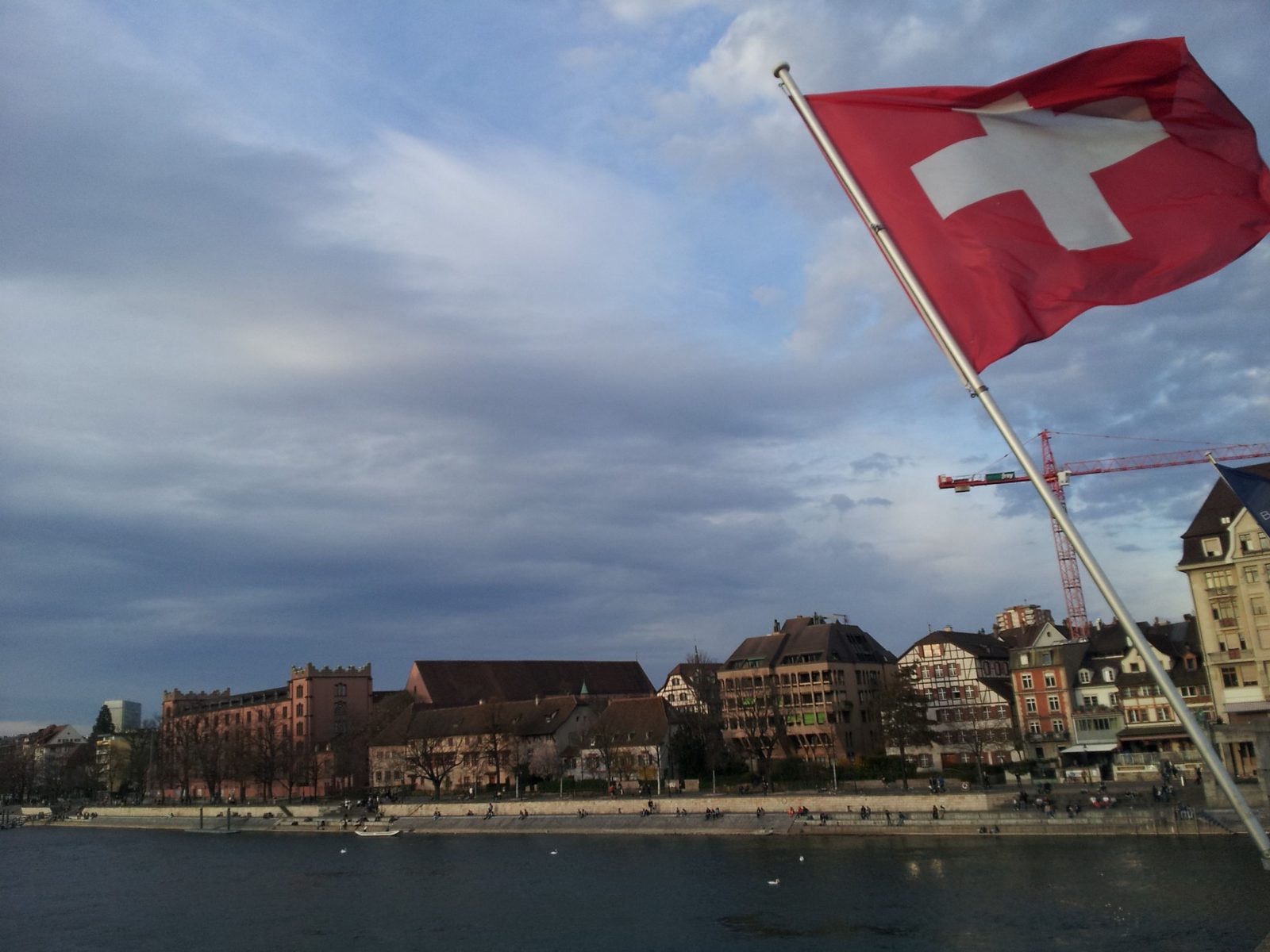
It’s been a few months since I first came to Basel, and I clearly remember how curious I was before I did so. Even though I had been living in Germany for two years, I had never crossed the southern borders and visited Switzerland. I had been anticipating a lot of changes, until I arrived at Basel Badischer Bahnhof and took the bus trip to where I would be staying. Somehow, I did not feel that I was in a completely different environment, as the city did not seem to differ much from a German town(Heidelberg remains my favourite though). And that made sense, as Basel is located barely 5 kms away from the German border.
However, what I had not anticipated was the change in the German dialect. After several trips to the supermarkets,bakeries and cafes resulting in confusion, I realized that things would have been slightly better if I knew certain words and phrases in advance. So, today, I am compiling a list of the most basic things,out of experience, that would be useful to you if you are visiting Basel for the first time,or if you,like me, are making a transition from basic German to Swiss-German.
1.Salutations – My first few visits to Migros and Coop supermarkets left me quite perplexed in this regard. While paying up at the cash counters, it was very common in the German supermarkets to greet the cashiers with a ‘Hallo’ and ‘Tschuss'(Bye) or ‘Danke'(Thankyou). However, I was left clueless when the cashier at Migros responded by saying something completely different. On asking my Swiss friends, I got to know that the most common forms of greeting someone here are ‘Grüezi‘ and ‘Adieu/ada’(formal) or ‘Salü’ ,’Ciao’ ,’Tschuss'(informal). Since Basel is very close to the French borders, a lot of French influence can be seen in the dialect too. Hence, ‘Danke’ is replaced by ‘Merci‘ , and ‘Vielen Dank’ by ‘Merci vilmal’.

2. The Cheese conundrum– Undoubtedly, Switzerland and cheese go hand in hand. While I was getting used to the different names of cheese available(and trying to find the mild ones), I was smitten by some cheese snacks prepared by a friend one day. On asking her what they were called and where I could buy them, I was told that the name would be translated in English as ‘small cheese cakes’. To me, the German name sounded as ‘Käse Kuechli’. On my next visit to Migros, I started looking out for such a pack in the frozen section, so that I would just have to bake it in the oven. After several futile attempts to find anything beginning with ‘Käse’ , I finally asked a salesperson to help me out. When she conveniently took out a box from a spot I had crossed several times, I was utterly shocked! And here’s why:
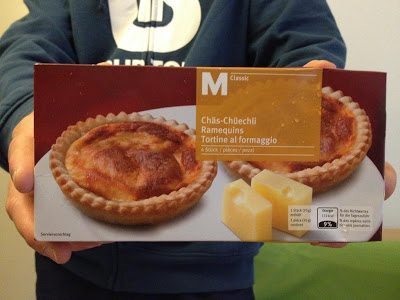
It is spelt as Chäs chüechli in Swiss-German!
3. Eating Ettiquetes – Just like the tradition of wishing each other a good appetite (or Bon Appétit) is followed around the world, Switzerland too has a special phrase for it. And it is not Guten Appetit , as I had assumed it to be. When I got a different response to my greeting, I got to know that the correct phrase is ‘En guete‘.
4.Breakfast Bafflement-While getting up in time to have a leisurely breakfast on weekdays has rarely been my cup of tea, grabbing a croissant on the way to work or Uni had been quite common with me and my friends.Hence, out of habit, I stopped outside a bakery one day to read their breakfast specials, and was quite confused on not seeing a ‘croissant and coffee’ combo listed. How could a bakery not have croissants but ‘Gipfeli + Kaffee’ listed on top? A few seconds later, I discovered that croissant too had another name in Swiss-German: Gipfeli, indeed!

Source:Schwyzer-Volksblatt
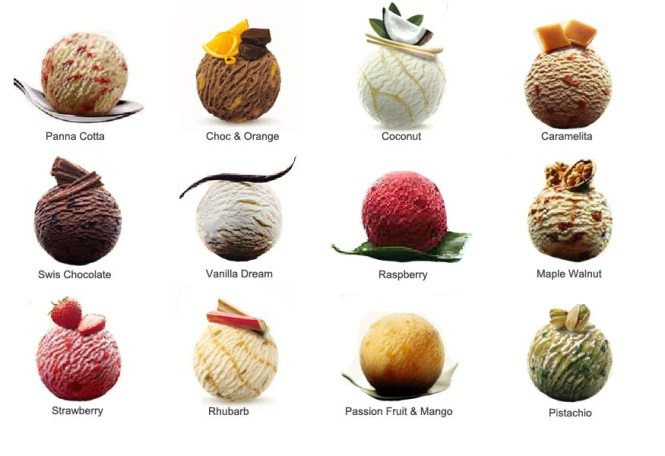
5. Ice,Eis baby!– Who would not love to get some ice-cream on a hot,sunny day?In fact, I have actually seen people change their random evening plans to go back to the dorm because someone from the common kitchen had got a Movenpick ice-cream box!And if ever there was an ice-cream eating competition, I’m sure that my kitchen mates would definitely be on the list:) Anyway, if you are in Basel and want to treat yourself to some delicious Movenpick flavours, remember that ice-cream is not Eis, as in Germany, but glace.
6.Biking- All the bicycle or Fahrrad lovers would agree that it is one of the most flexible and convenient ways to move around, especially if the weather is good and you have Google Maps by your side. As is the case with a lot of train stations in Germany or France, Basel too offers you the opportunity of renting a bike or an e-bike and cycling around Switzerland. However, a Fahrrad is known as a Velo here , and that would be the basic term you would need to know before you can book your bike in advance at rentabike.ch !
There are several other instances when I just do not understand Swiss-German; if someone either speaks very fast or uses some confusing words. For instance, Paprika is German for Capsicum and I thought Pepperoni was Salami or something similar. But, I have also heard people in Basel use pepperoni for capsicum!
The most amusing time,however, was when I had picked up the menu somewhere during the Basel Fasnacht (Carnival) 2014 and the typical Basel dialect seemed to be more like Dutch to me. I enjoyed myself a lot though,and shall blog about in detail later.
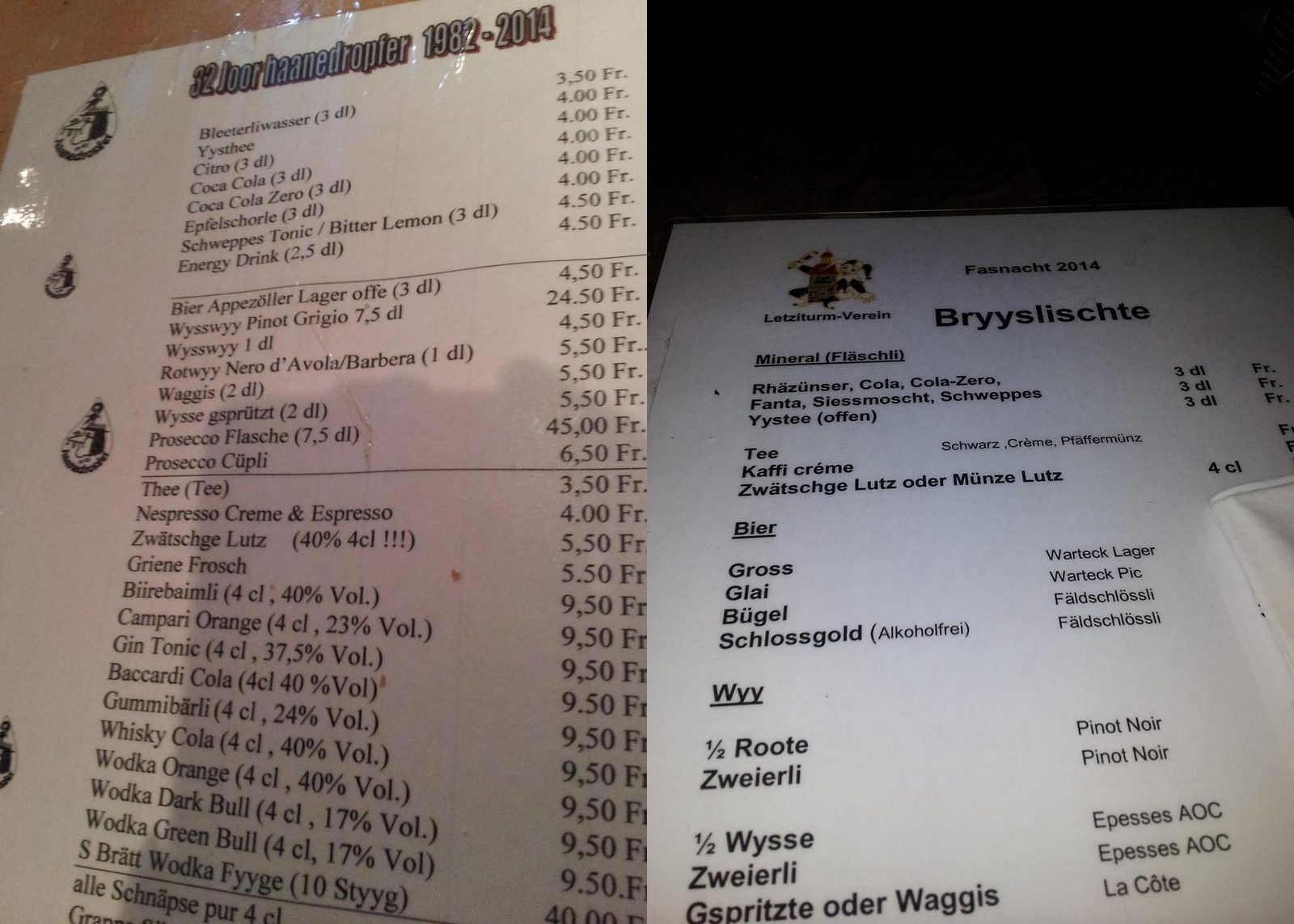
Hope this list is able to give someone a heads up before they plan a trip to Basel!
Discover more from Europe Diaries
Subscribe to get the latest posts sent to your email.
happyveggietraveller
Hi Menorca, this blog was written ~4 years ago. Anything has drastically changed or any new veggie food places you recommend? I plan to visit Basel for a weekend of July 6-7. Cheers, Jai
reflectiveponderer
Hey! Yea, I do have a whole list of where to eat in Basel. Will link it up here shortly
reflectiveponderer
Here is an extended list of where to eat https://www.skyscanner.net/trip/where-to-eat-and-drink-in-basel-switzerland-menorca-europediaries
reflectiveponderer
Just want to add that Aladdin is now closed and has been replaced by an Indian restaurant called Karma. Also, Desperado doesn’t offer the starter platter anymore. But B.Good is a good place for healthy shakes, healthy veg burgers etc and there’s a new Mexican place called Cartell that people are loving
Pingback:Things I realized after moving to Switzerland: 3 years of expat life - Europe Diaries
Pingback:"You No Spanish" - My Journey of Learning a Language in a Foreign Country | Up Up and a Bear
Pingback:The year that was:Europe Diaries 2015 | Europe Diaries:My travel stories and experiences
Pingback:Christmas markets in Europe | Europe Diaries:My travel stories and experiences
Nirav
yep.. M.Sc in Electrical. Currently writing Thesis in Sensorik. And u ?
reflectiveponderer
Completed my Master thesis last July. .working in research now
Nirav
cool! have a good time ! 🙂
reflectiveponderer
Thanks! You too! Thanks again for stopping by and do come visit us again 🙂
Nirav
cool! Didnt knew it is possible to study in DE and Thesis in other Country!! way to go… 🙂
reflectiveponderer
Yes, you can do it ub any country .as long as it is approved:-)
reflectiveponderer
Are you studying or working in Bavaria?
Nirav
It may owe to amalgamation… to my surprise, people in this small 7000 populated village, where i live, are more warm and responsive than in larger cities. only catch is that you Need to understand german i guess! 😉
So what brought you over from Deutschland to Schweiz ?
reflectiveponderer
That is nice! Well, I moved here for my thesis work and then stayed back. .
Nirav
well here in Bayern many people say “nen Guten” or “Lass es dir schmecken”…what I wonder is, how do swiss people treat you as an “Ausländer”?
reflectiveponderer
Haha..yah Bavarian dialect is also different. ..and as for treatment, haven’t really felt any different from what I felt in Germany. ..of course I live in a city that has a large international population. .
Urska
Oh yeah. Life would be so much easier if Swiss would speak High German. But you get used of it… eventually. 🙂