

Explore Castles on the Rhine: How to visit the beautiful castles in Germany
Did you know that there are more than 25,000 castles in Germany alone? The Middle Rhine Valley, in particular, is a 65 km stretch covering Bingen, Rüdesheim und Koblenz, where you could spot around 40 hilltop castles and fortresses erected over approximately 1,000 years. The Upper Middle Rhine Valley has been part of the UNESCO World Heritage since 2002. Most of the castles are visited by tourists to learn about their importance in Germany’s history. Many of these castles have been reconstructed. However, many have crumbled and are skeletons of what they once were. Each castle tells its own story, has a different feel, and provides unique beauty in its structure and surroundings. The view from the castle walls lets my imagination wander and makes me feel like royalty every time. A trip to one or many of these great sites is necessary for any history enthusiast and curious tourist. Here are some ideas for visiting castles on the Rhine River, close to Frankfurt, Wiesbaden, and Mainz, and also some bonus ideas for visiting other castles in Germany.
Burg Rheinstein
Rheinstein Castle is a rebuilt hillside castle on the steep slope of the Bingen Forest in the Rhine Valley. Burg Rheinstein is an incredible experience, whether travelling alone or with family. This location is the first reconstructed castle that we had the pleasure of visiting in Germany. If you decide to visit, you will see suits of armour, era furniture, clothing and much more during your tour! I have visited this castle twice and cannot wait to return for a third visit. Situated next to the Rhine River, this castle allows visitors to imagine what life must have been like many centuries ago.
Like other castles that still exist today, the castle’s history is fascinating. This castle was built in the 13th or 14th century. Throughout history, it changed hands from multiple Arch Bishops to Prussian royalty. In 1823, Frederick William Ludwig, Royal Prince of Prussia, bought the castle ruins and the rock. (Rheinstein Castle). The last castle owner of the Prussian aristocracy was in 1953. Now the castle is privately owned and maintained by the Hecher family. We managed to get through the tour in just over an hour and felt like we had an incredible experience. Tourists of all ages will be thrilled to see such an incredibly restored castle. However, please note that we did not find this castle to be stroller-friendly past the entrance.
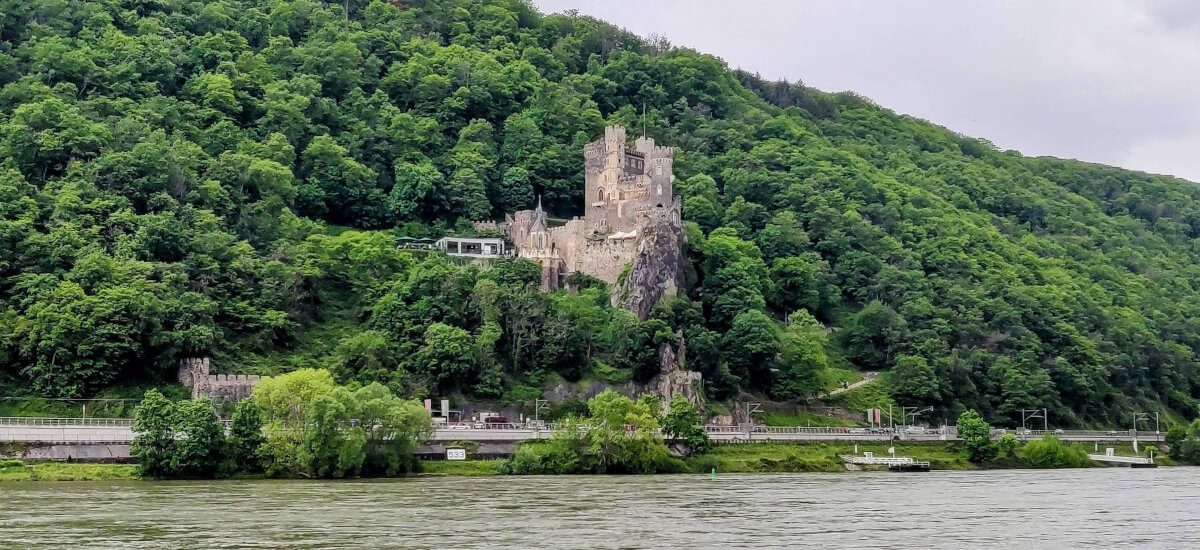
Spot the beautiful Burg Rheinstein if you are on a boat from Bingen towards Bacharach or St. Goar
Editor’s note: Thumbs up from my end to the Kleiner Weinprinz restaurant in the castle. After all the climbing and walking, it’s worthwhile to pause for a break and have some decent vegetarian and other options- plus some great local wine! I loved visiting this castle personally, even though the steep ascent and descent were not that easy for an unfit person like me!
How to get to Burg Rheinstein: You can either take a train to Trechtingshausen (45 mins from Mainz) or choose to take a boat trip from Bingen to Trechtingshausen and then decide to walk for 30 mins or take a taxi.
Costs and things to note: Expect to pay 8 euros for adults and 4 euros for children (5-14 years) if you want to enter the castle premises and the restaurant. Dogs may be carried on a short leash. The website suggests limiting your visit to the castle to a maximum of 2.5 hours. The ascent is not wheelchair or stroller friendly.
Timings: Last entry is at 5 pm daily during the summer and 4 pm only on weekends from Nov 6. Unique opportunity to visit the Christmas castle until 7 pm on weekends from Nov 25 to Dec 17, 2023.
Burg Reichenstein
Presumed to be built sometime between 1100-1200 as a feudal castle, Burg Reichenstein is the second castle you can visit in Trechtingshausen. It is also visible from the boat even if you decide not to stop by the town but go to some castle towns further away. What I found interesting was the castle was built by a robber baron, Philip von Hohenfels, who seized every opportunity to steal money and goods from ships crossing the Rhine until this behaviour was put to an end by a battle. In the Middle Ages, the Rhine was one of the most important trade routes between the north and South. The princes and nobles of the Middle Rhine region built the castles not only as defensive and residential castles but often also as customs stations to collect money and customs duties from the numerous traders and boatmen on the Rhine.
Often left to decay, Reichenstein Castle – like many other Upper Middle Rhine Valley castles – was revitalized in the spirit of Rhine Romanticism. After converting from 1899 to 1902 into a neo-Gothic residential castle, the castle was finally opened to the public in 1936. An attempt was made to come as close as possible to the original living situation of the late 19th century. The furnishing of the individual museum rooms was completed with further furniture and exhibits from the initial private fund of the owner’s family. This unique ambience enchants guests and museum visitors from all over the world. Kids will also be entertained by some of the offerings of the museum.
For me, Burg Reichenstein seemed to be a quieter and smaller castle than its neighbour, Burg Rheinstein. With an interesting museum and the possibility to explore the vast open areas like the tournament field and the Shield wall, its 350-year-old family-owned history, the fine dining Puricelli restaurant and a renowned hotel, it is also easier to drive to the castle directly and spend some peaceful time.
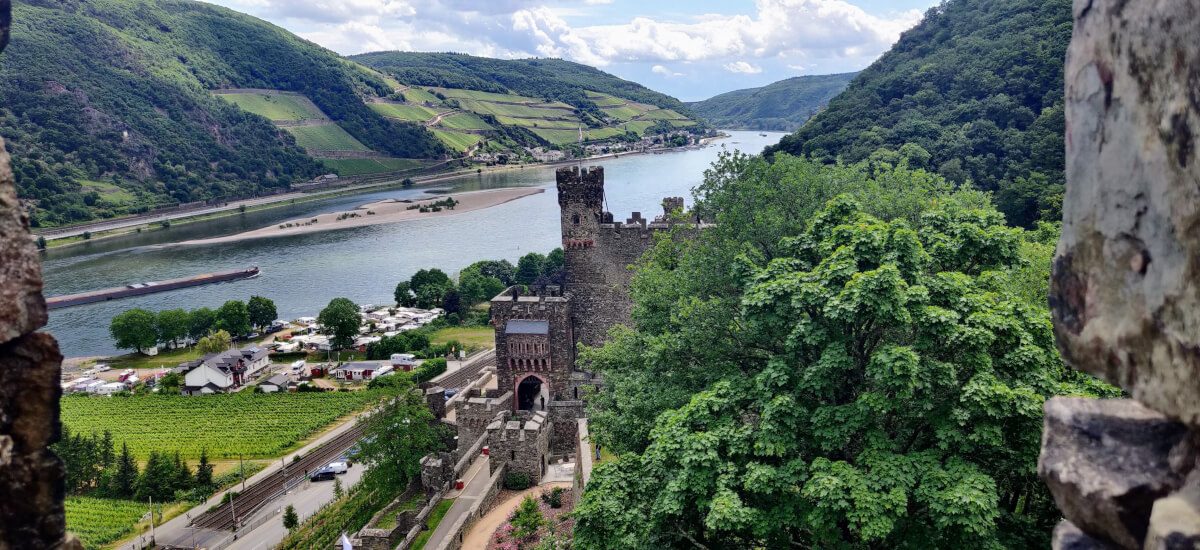
View of the main tower of the Burg Reichenstein while exploring the castle on the rhine
How to get to Burg Reichenstein: Take the train to Trechtingshausen and walk about 500 meters to the castle. It is also possible to take the boat and then walk up to the castle.
Costs and things to note: Expect to pay 9.5 euros for the museum entry for adults and 4 euros for kids below 14. Dogs are unfortunately not allowed in the museum but can be left by the reception while you complete your visit.
Timings: The last entry is possible for the museum till 4 pm daily. The hotel is open throughout the year for overnight stays, and the restaurant has varying timings depending on the season.
Neu-Wolfstein Castle Ruins
Neu-Wolfstein Castle is a castle ruin at the top of a steep hill in the village of Wolfstein. The ruins have been dated back to 1275, and it is assumed that the castle was built as part of the village’s fortifications. Now there are only parts of the once-existing outside walls and what remains of the castle’s gate. Just outside the castle ruins lie rows of grape vines that run from the top of the hill down to the road below.
The rocky and narrow road leading up to the castle weaves through a collection of quintessential cobblestone roads and pitched roofs that have become infamous in depictions of German villages. The trip to this castle was one of our first as residents in Germany. The drive allowed a quick lesson in navigating the narrow and high European roads we have become so familiar with thus far. Though far from reconstructed, we enjoyed seeing the remaining castle walls and the view from what would have been a window centuries ago. The drive to the castle ruins is a little tricky, and I recommend going during the low-tourist time to avoid difficult parking.
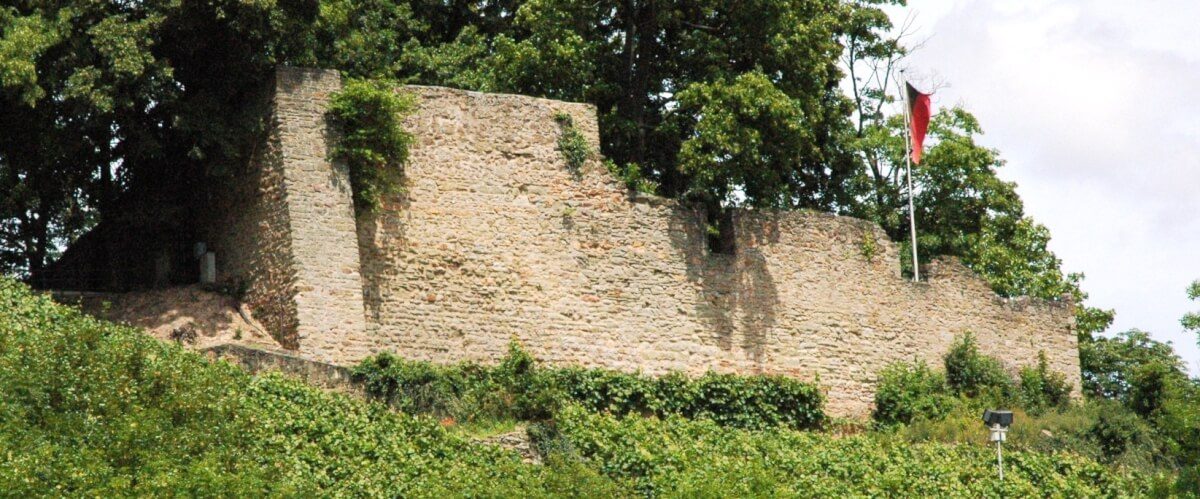
Neuwolfstein Castle ruins. Image by I, Ulli1105, CC BY-SA 2.5, https://commons.wikimedia.org/w/index.php?curid=2370391
How to get to NeuWolfstein ruins: While Wolfstein station seems well connected with Kaiserslautern and can take about half an hour by train, it is about 130 km from Frankfurt and a little less than 100 km from Mainz. Driving may be most straightforward; otherwise, be prepared to change 2-3 train connections and keep 2+ hours for train travel each way.
Reichsburg Cochem / Cochem Castle
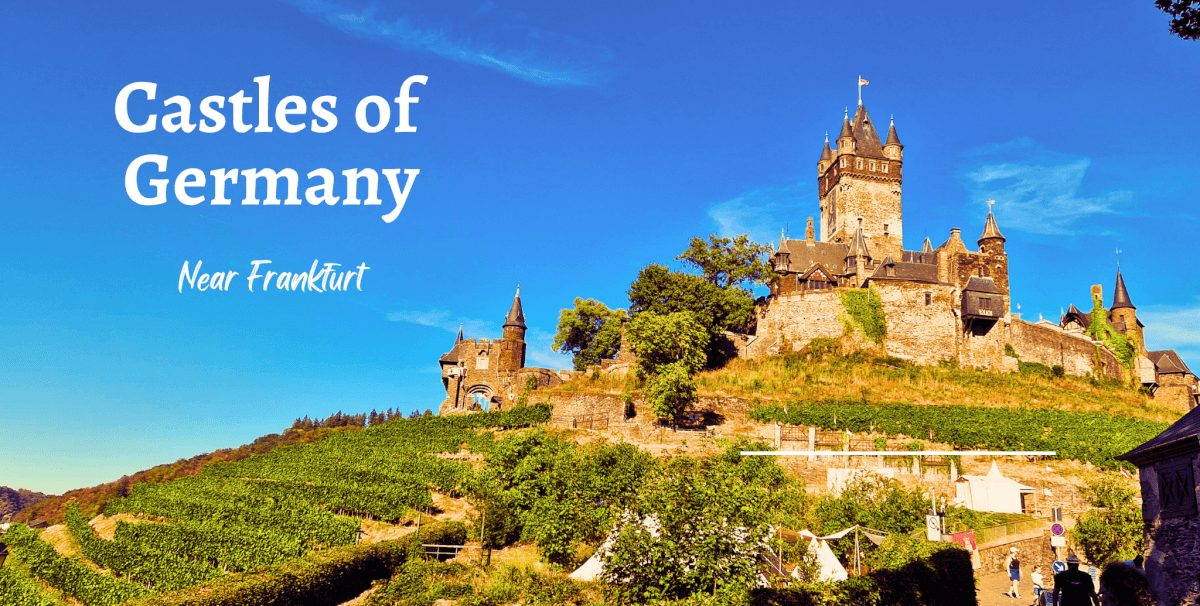
The Cochem Castle is one of the most impressive castles, high atop a hill in the Mosel Valley. Technically not a part of the Rhine Valley, it is pretty close to Koblenz – hence still easily accessible if you are in the Frankfurt or Cologne region. The largest medieval castle on the Mosel was heavily damaged during a war of succession. It was bought and lovingly restored in the neo-gothic style associated with German castle romanticism in the 19th century. Prepare to be delighted by the impressive interiors of rooms such as the Knight’s Hall, the Dining Hall, the Trophy Room and the Bower.
Visiting Cochem Castle last summer during the August Medieval festival was an eventful experience, albeit a long walk from the central station if you are unlucky like me and do not spot any shuttles or buses going up. The website says shuttles run through the summer – perhaps just my bad luck for not spotting anything on the Sunday I visited.
Every year, during the first week of August, medieval performers, artisans and other folk artists lighten up the Castle during the medieval festival. The ancient walls of the castle offer a one-of-a-kind backdrop for rustic vendors and spectacular stages where visitors are invited to become a part of a lively market during the middle ages. Various contemporary artisans present their handy-work while mead, wine and fine meats fresh off the grill are available for purchase. Medieval performance troupes and troubadours playing antique instruments are truly captivating!
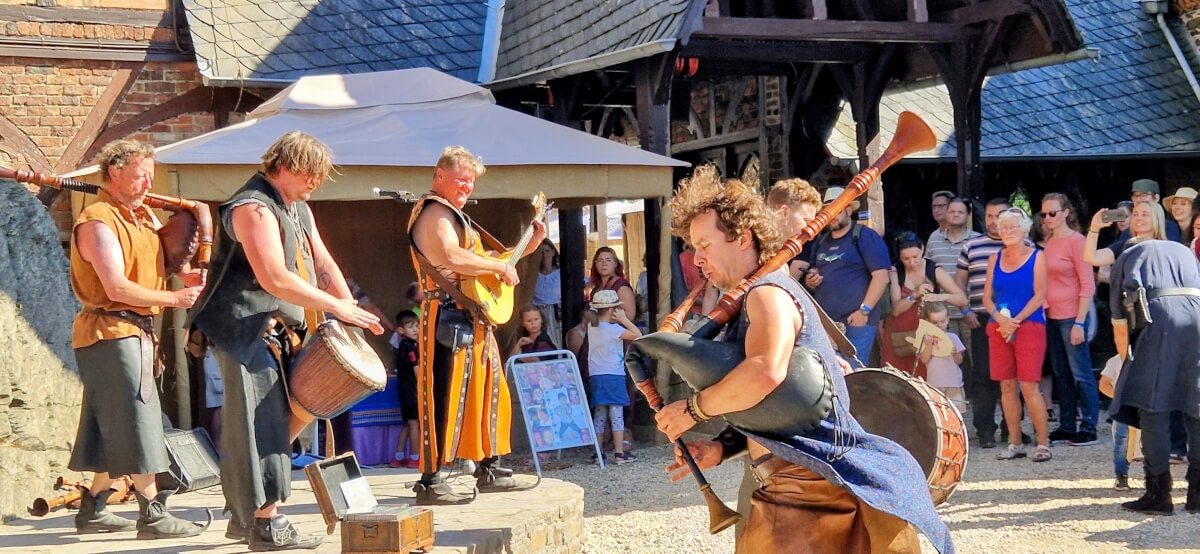
Medieval festival performers in action at the Cochem castle
Burg Rheinfels
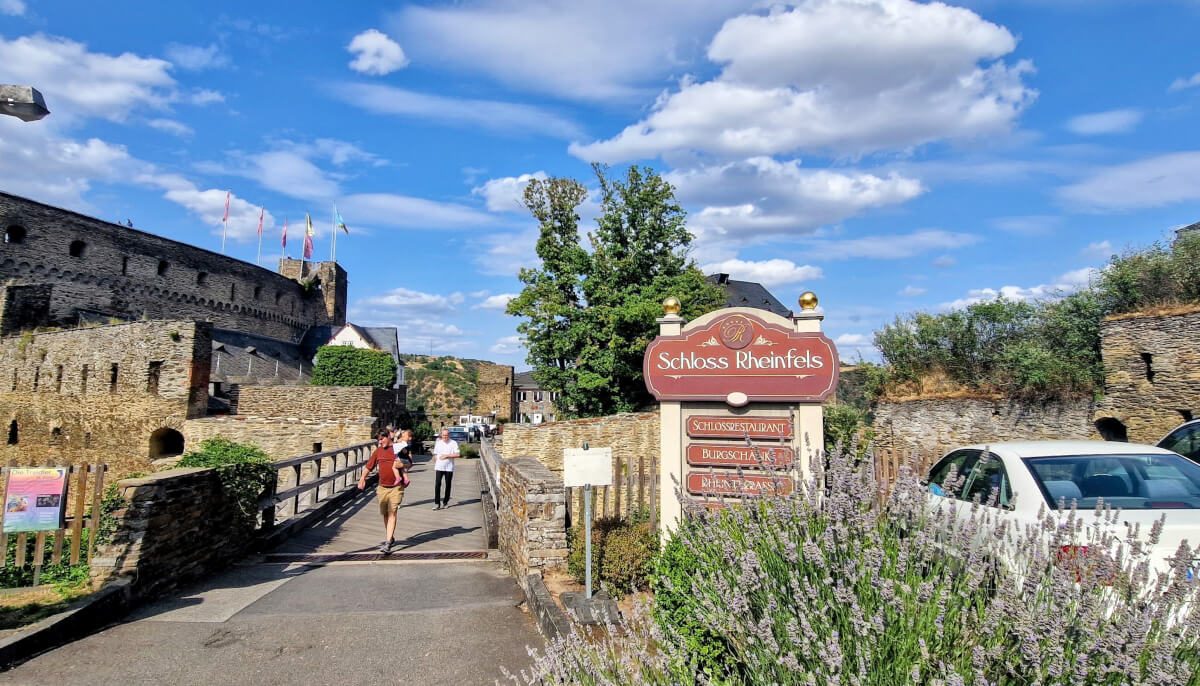
Burg Rheinfels had been one of the vital castles on the Rhine in the 14th century. This is the latest castle I visited on a recent summer weekend. I had been waiting to try out this beautiful boat ride from Bingen to Sankt Goar since I moved to Germany and knew about Lorelei’s legend. The boat from Bingen for the Lorelei route occurs only twice daily, and I chose to take the 11 am ride, passing by at least a dozen castles and fortresses before stopping first at St. Goarshousen to visit the Lorelei and then crossing the river to visit St. Goar and the beautiful Burg Rheinfels.
For those who would like an extended relaxing stay, you might find your perfect halt in the Hotel Schloss Rheinfels’s wellness area- 500 square meters housing a steam bath, solarium and its own wellness lounge. It is also a beautiful location for having events, a wedding party or simply a weekend stay.
How to get to Burg Rheinfels: To go up to Burg Rheinfels, you can easily take a bus from St. Goar for 3.5 euros per person one way and come back the same way, or choose to walk up/down, depending on how much time and energy you have. The last bus is around 5 pm – hence, I took the bus up but walked the scenic way down using a stairway with beautiful views.
Costs: Adults would pay 6 euros to enter the castle premises while kids would need a 3 eur ticket. Even if you don’t want to enter the museum, it is still a nice view from the castle’s exteriors and you can try out the souvenir shops, and restaurant or stay in the hotel if you please.
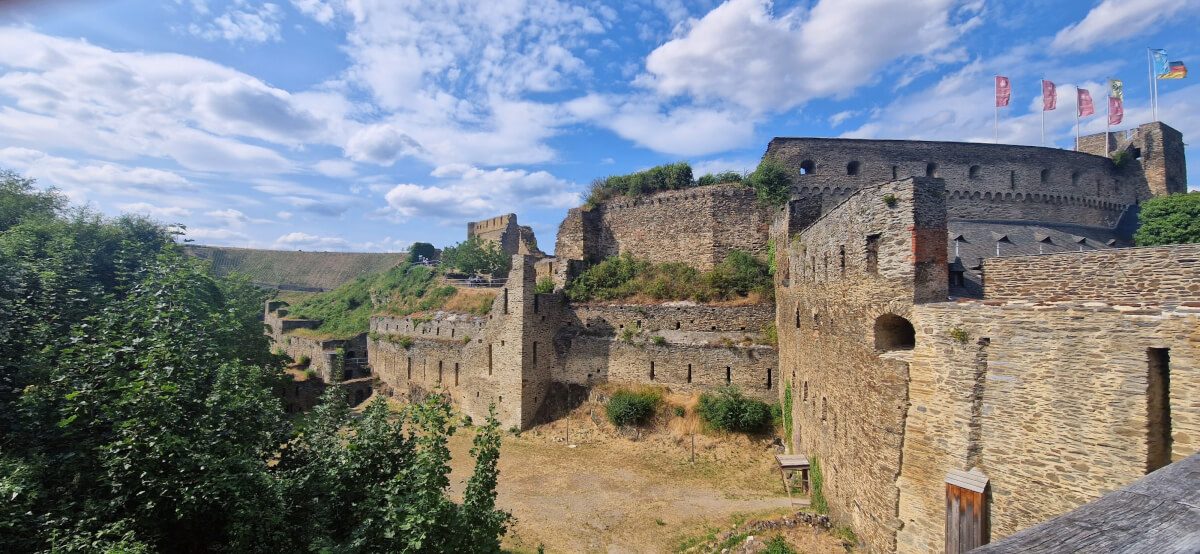
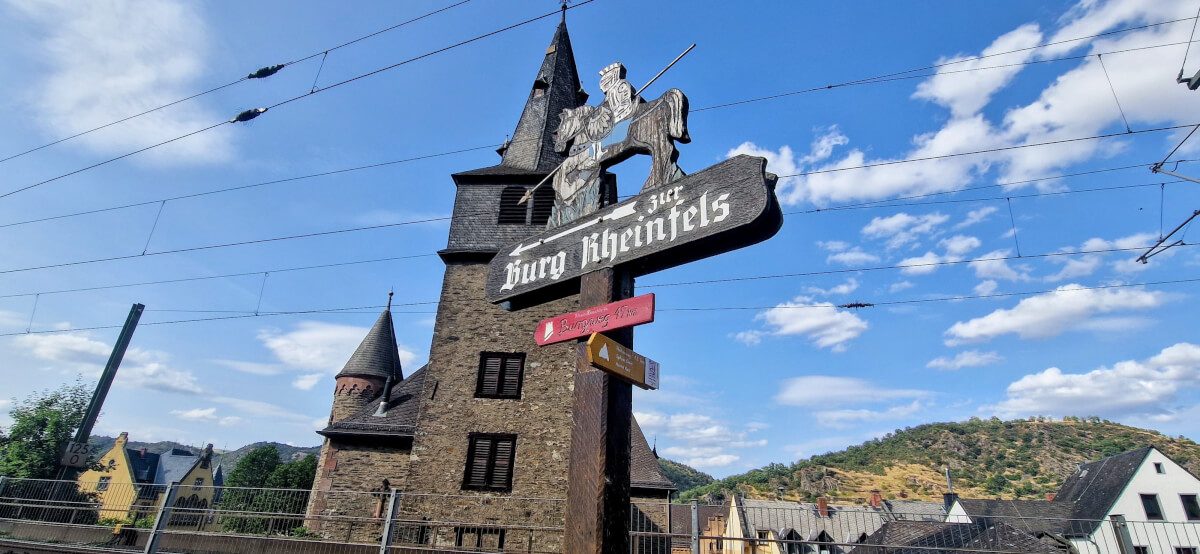
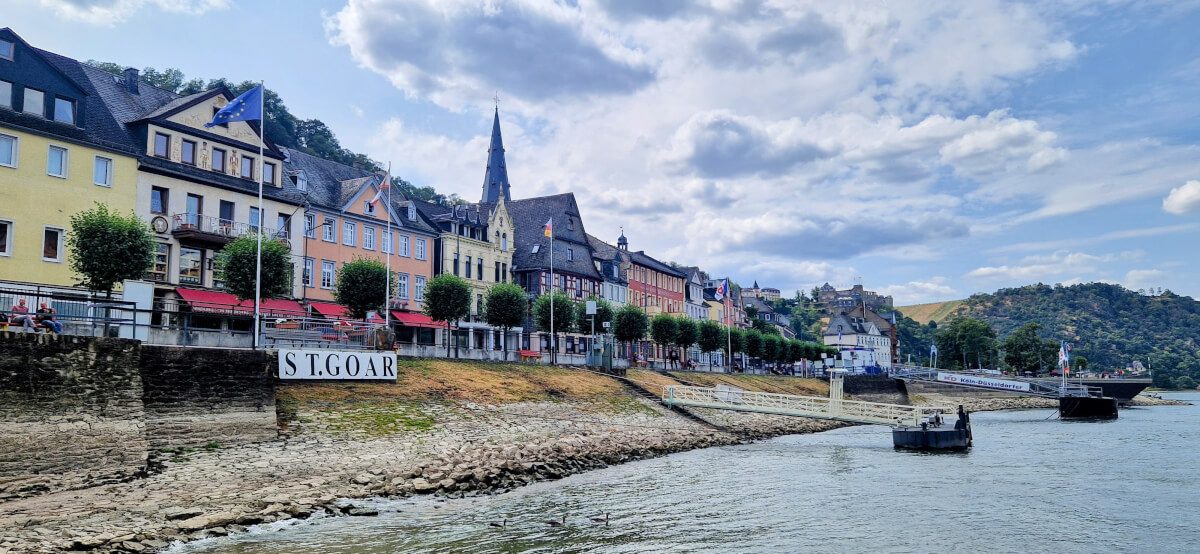
Castles are everywhere in Germany! If you cruise down the Rhine River or drive through the picturesque countryside, castles will undoubtedly come into view. These structures are in many states of repair, yet despite their condition will add character to your journey. Nestled amongst modern buildings, roads, bridges, and houses, these incredible structures are bound to delight tourists of all ages. The richness of history belonging to each castle can bring out the child in all of us. Get out there and explore the castles on the Rhine and beyond!
Travel Tips for visiting castles in Germany
- Most castles are not stroller or wheelchair friendly, so plan accordingly.
- Bring snacks and comfortable shoes. Many castles are only ruins and can be far from both a parking lot and a restaurant!
- Avoid visiting castles in the rain; the stones and pathways can be slippery.
- The castles we have visited have been nestled into larger villages. In addition to a historical tour, it is enjoyable to spend time in nearby towns and explore.
- If possible, research the castles you would like to visit beforehand to ensure you can plan for needed fuel and determine the castles’ opening hours and entrance fees.
Other Interesting Castle Visit Ideas in Germany
- Burg Eltz
- Schloss Heidelberg: Read all about visiting Heidelberg . Don’t miss out on the castle illuminations thrice a year.
- Schloss Neuschwanstein: Your getaway guide to Munich and beyond
- Hohenecken Castle
- Hohenzollern Castle


This article is written in collaboration with our guest author Maggie Andrews, a freelance blogger, content writer and business consultant. Her topics of interest range from travel to business topics. When she isn’t writing, she can be found chasing after her two children under four, running with her dogs, playing soccer on her local German team or travelling with her family through Europe. Follow her journey on Facebook and on A Product of Travel.
Discover more from Europe Diaries
Subscribe to get the latest posts sent to your email.
Alanna
So many beautiful castles in Germany. I went as a kid but definitely need to go back now.
Randy Eady
Excellent! One I’d add:
The Drachenfels (Dragon’s Rock), a thousand-foot hill in the German Siebengebirge overlooking the picturesque Rhine valley, is a place of ancient myth and dragon lore. One of its most famous legends, based on the epic poem The Song of the Nibelung (Nibelungenlied – 12th century), is the tale of its hero Siegfried slaying the dragon Fafnir – that purportedly had its lair in this hill – and bathing in the serpent’s blood to become invulnerable.
The ancient poem, based on oral traditions of Germanic myth that have some of their origins in historic events and individuals of the 5th and 6th centuries, spread throughout most of Germanic-speaking Europe.
Atop the rock rest the ruins of Burg Drachenfels, a 12th century castle destroyed during the Thirty Years’ War and never rebuilt, whilst situated lower down the hill is the neo-gothic Schloss Drachenburg (1882).
The Hall at Drachenfels (Niebelungenhalle), about a third of the way up the rock, was created in in honour of composer Richard Wagner’s The Ring of the Nibelung, an operatic festival play paying musical homage to several characters from Germanic heroic legend, namely Norse sagas and the medieval The Song of the Nibelung. A full accounting w/images & pictures: https://www.canneryrowpress.com/issue7 Dragon’s Blood (Art History Section of Feb ’22 issue 7, Cannery Row Magazine)
reflectiveponderer
Thanks for this, Randy! I have been to Drachenfels once, long ago, but was not aware of this poem and history. Thanks so much for sharing!!