

Vienna in Two Days: Palaces, Coffee and Curiosities
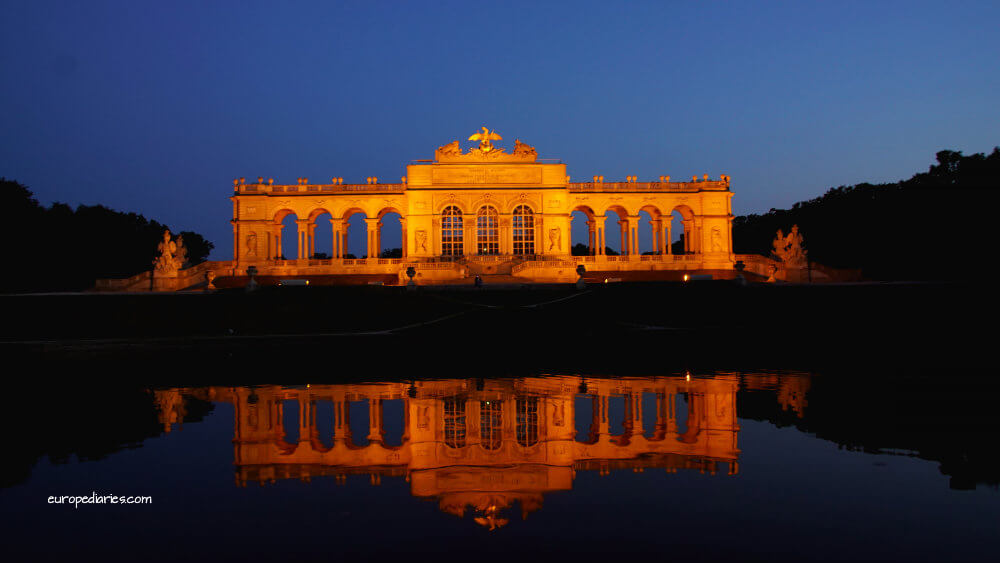
I had seen Schönbrunn Palace from the outside more than once before I finally walked through its doors. The rooms did what the guidebooks promise: chandeliers, gilded ceilings, paintings worth more than the buildings that hold them. What stayed with me afterwards was not the furniture but the woman whose presence runs through the place, Empress Elisabeth of the Habsburg dynasty, known to everyone as Sisi. A woman with every comfort and almost no freedom, who eventually left the palace behind and travelled the world alone, often in disguise. Vienna is full of her, on posters, in brochures, in exhibitions and fashion events themed around her image. She became the thread I followed through two days in the city.
I had also spent years thinking of Vienna as slightly overrated: the posh shops, the fancy cafés and hotels, the majestic cathedrals and the horse-drawn carriages around Stephansplatz and Karlsplatz. All of that exists, and it is as polished as you expect. But behind the grand buildings and the coffee-and-cake culture there is another city, and that is the one I wanted to see.
This plan takes in both. It assumes you like museums without wanting to spend the whole trip inside them, and that you would rather walk a neighbourhood than tick off a list.
Before you go: two days and a city card
Vienna rewards a slower pace. Two days is enough for the centre if you resist the urge to see everything, and far too little if you try. Check museum opening times in advance, because several close earlier in winter than in summer. The city is large, so a public transport pass is not optional. The Vienna city card covers unlimited travel or the hop-on hop-off buses, depending on the version you buy, and brings discounts at restaurants, museums and shops. If you are in Vienna for a short break, it pays for itself quickly.
Day one: the palace and the empress
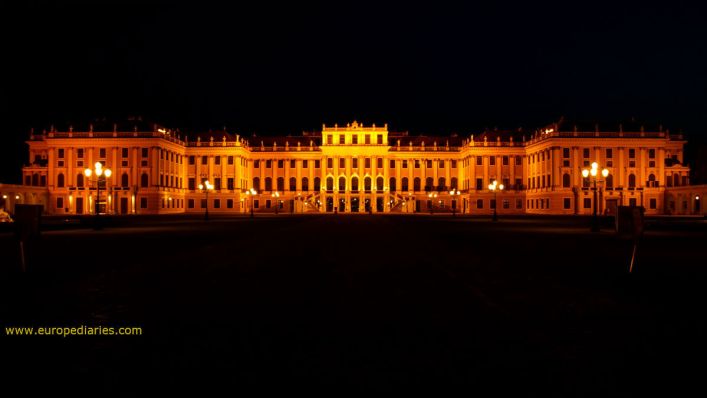
The hour-long Grand Tour of Schönbrunn is the best introduction to classical Vienna. As I moved through the rooms, the guide filled in the family history. Sisi arrived at court as a 15-year-old Duchess from Bavaria. She was married to her cousin, Prince Franz Joseph I of Austria, because he had fallen for her, even though he was supposed to marry her older sister. The House of Habsburg was one of the most powerful royal houses in Europe from the 1400s to the 1700s, with kingdoms that included Austria-Hungary, Germany, Croatia, Spain and Portugal. Her mother-in-law was dominant and controlling, and would not even let Elisabeth name or care for her first two daughters. It is not surprising that she was anxious and depressed from a young age.
The court was fascinated by her appearance and careless about her health, a pattern that has not disappeared from the way famous women are described.
What followed was a long campaign to control how she looked. She became obsessed with beauty and went to extreme lengths: eating disorders, corsets made specially in Paris to keep an 18-inch waist, a hairdresser who spent two hours styling her very long hair every day. The palace shows you the rooms; the story supplies the tension. I left with the uneasy feeling that the most expensive cage is still a cage.
The empress beyond the palace
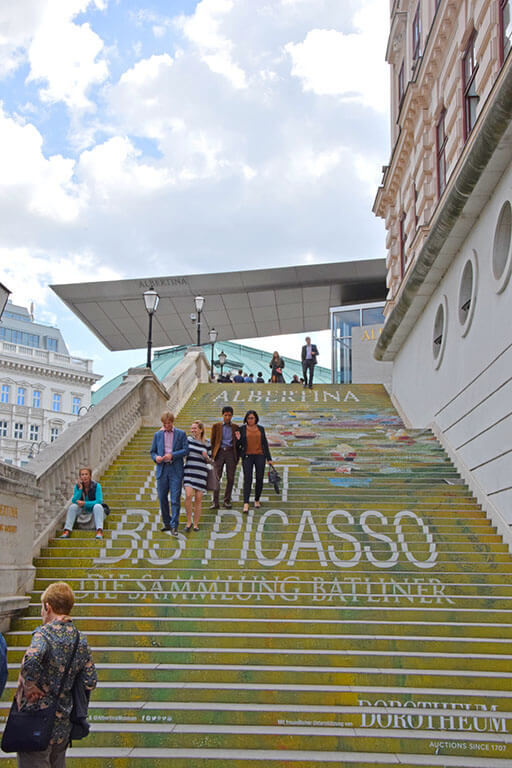
Sisi’s story continues in the Albertina Museum, one of Austria’s leading art museums and a former residence of the Habsburg rulers. There are works across several floors, and the first floor is still kept as the rooms of the royal residency. You can easily spend two hours between the permanent collections and the temporary exhibitions. At the time of my visit it was showing collections from Monet to Picasso.
The Belvedere Palaces, the summer residence of a Habsburg prince, Prince Eugene of Savoy, are now UNESCO World Heritage sites and hold a huge art collection. A whole museum, the Sisi Museum, is dedicated to the empress. There I learned that she took language lessons during her two-hour hair routine, became a prolific horse rider, grew deeply attached to Hungary’s language and people, and travelled alone to Hungary, Greece, Croatia and Switzerland without wanting to be recognised as the empress. She spoke against early marriage, arguing that a decision of that size cannot be taken by a teenager who will then bear the consequences of other people’s choices for the rest of her life. She was assassinated in Geneva by an anarchist while travelling, for no real reason.
History can do strange things to dead people, as Jezebel put it, and Vienna has done a great deal with Sisi’s image. Whether that is tribute or commerce is a fair question, but the rooms and the story are worth the time either way.
Mozart, opera and royal rooms
Schönbrunn has a second musical claim. In 1762, a six-year-old Mozart gave his first performance before the royal family here and sat on the lap of Empress Maria-Therese. He later returned from Salzburg to live in Vienna for ten years. You can visit the MozartHaus in the centre today, and hear Mozart concerts at the MozartHaus and at Schönbrunn.
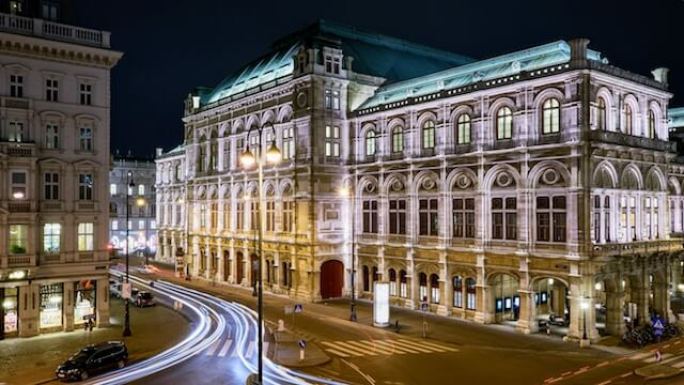
Opera is the other Viennese institution. The city is famous for its opera productions, and if you get the chance to attend one, take it, even though tickets are generally not inexpensive. A night at the opera is also a reminder that the formal city and the curious city share the same streets.
Coffee, cake and the art of wasting time
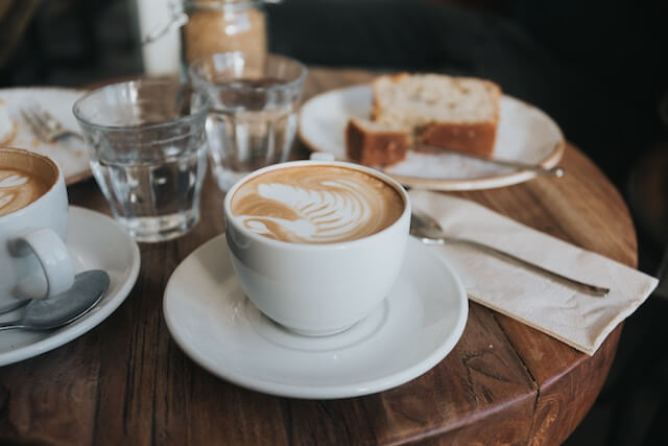
Cafés have been an important part of Viennese life since the 1900s. They were meeting places for people who wanted to argue about ideas, work, read or even gamble. Nobody limited how long you stayed, and this fruitful wastage of time was socially acceptable. It reminds me of the Adda in Bengal, India: a table, a group of friends and hours that do not need to justify themselves. Many cafés still keep the décor and habits of earlier decades. The coffee house is less a place to drink than a place to stay; the cup is the ticket, not the point.
Austria is known for desserts, so order Sacher cake or Apfelstrudel, or one of the many other cakes, wherever you sit down. Hotel Sacher, right next to the Albertina, is supposed to have the original Sacher cake, which is exactly why people queue for a seat. I think several bakeries serve coffee and cake just as well without the wait. There is more information on the coffee houses if you want to plan a circuit. Viennese coffee houses typically bring coffee with water and sugar on a silver tray, a small ritual worth noticing. If you have a sweet tooth or love coffee, do not leave Vienna without trying some of it, wherever you end up.
Day two: modern Vienna and the Danube
Architecture changed quickly in post-war Vienna, and the last few decades have added many newly designed art and residential complexes. The MuseumsQuartier is the easiest place to see old and new side by side: the Museum of Modern Art, KunstHalle Wien, restaurants, with the Volksgarten and the Austrian Parliament nearby.
When the museums close, go to the river. The Danube Insel has boating, plenty of places to eat and some trendy beach bars. A cruise can also take you to Bratislava in 75 minutes for around 20 euros, which is a strange and pleasant way to end an afternoon.
The odd side of Vienna
Sigmund Freud, the father of psychoanalysis, lived in Vienna in the 1800s and early 1900s, and his apartment and museum can still be visited. I have wanted to go for years and still have not managed it. The city also has a set of museums that rarely make the postcards: the Burial Museum, the Condomi Museum, the Torture Museum, the Hat Museum, the Coffee Museum and the Museum for Contraception and Abortion, among others.
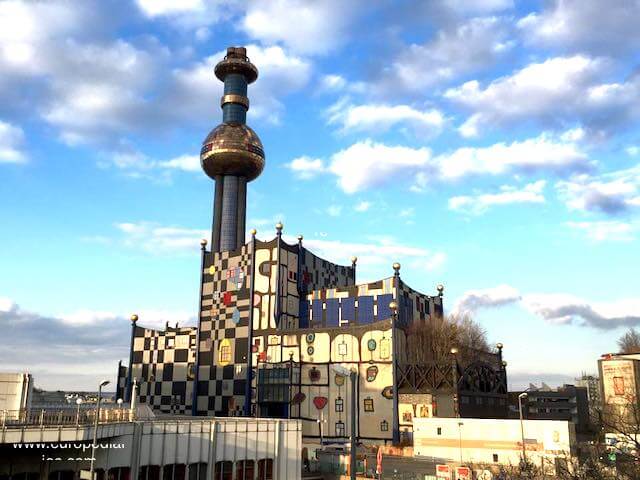
Street art is everywhere once you start looking. You can follow a self-guided route based on this map or join a walking tour. For the strangest building in the city, visit the Spittelau plant, a garbage incinerator designed by the artist Hundertwasser. He also designed the HundertwasserHaus.
Where to stay
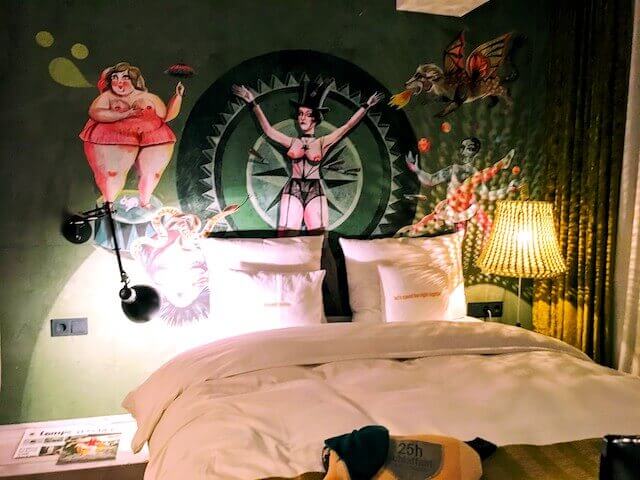
The 25 Hours Hotel near the Volksgarten, the Parliament and the MuseumsQuartier is the one I would pick if you like design that does not take itself too seriously. Its slogan is ‘We are all mad here’, it belongs to a chain spread across several European cities, and the theme is a circus. Rooms have related wall art plus Bluetooth speakers, a yoga mat, a hula hoop and other useful and fun accessories. I enjoyed the pizzas and drinks at the 1500 Food Makers Restaurant inside the hotel and would recommend it for the ambience and service; afterwards, go up to the rooftop bar for drinks and views. A double room with breakfast and spa access costs roughly 120 euros a night.
What to eat, from a sausage stand to a smart dinner
Austrian cooking runs on different kinds of dumplings, sausages, cakes and pancake-based dishes. I collected pictures and notes on the vegetarian versions in my guide to vegetarian food in 24 European countries.
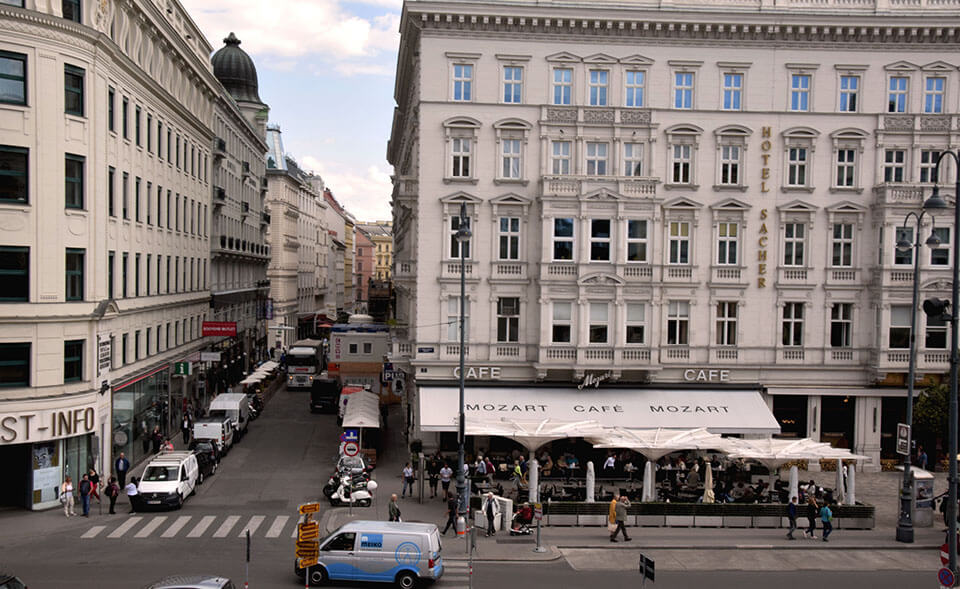
For a cheap meal in a good position, go to the Bitzinger sausage stand just outside the Albertina, with the Bitzinger café alongside. Before or after the museum, order a Wurst, the Viennese sausage, with a glass of local beer or wine. Vegetarians can ask for potato snacks instead. While you are there, buy a packet of Manner wafers. Standing between the Albertina and the Café Mozart, a popular and high-end café, you will not find a better location and a cheaper price for a meal while still taking in the architecture.
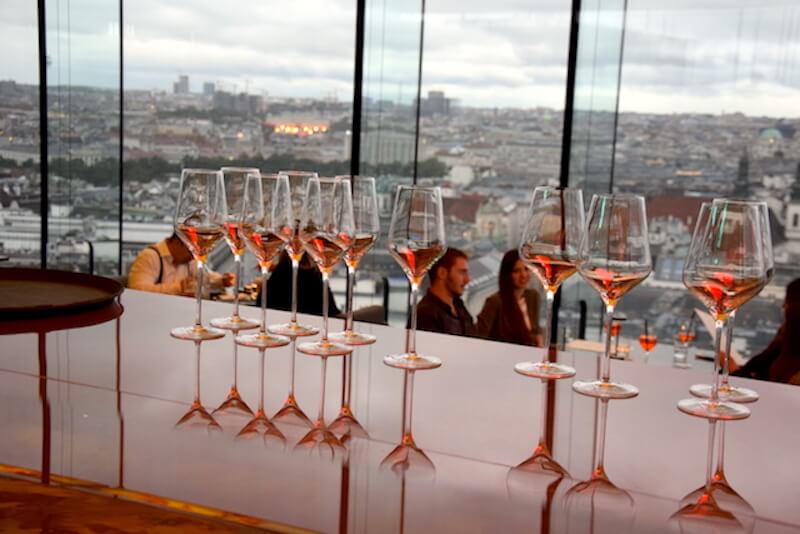
Other stands and trucks around the city sell sausages, doner and vegetarian wraps; the Street Food Vienna website lists them. On a wet day, a rooftop bar is a good substitute for the river. The Aloft at the Sofitel on Schwedenplatz is one of several stylish bars with a view, and there are plenty of pubs and clubs for later; other options are here. Go for the views, stay for the drinks and the lights.
For a smarter dinner, try Lugeck for Austrian cooking, or the funkier 1500 FoodMakers at the 25 Hours. I was nervous about vegetarian options at Lugeck, since the menu leans on sausage and meat, but the salads were delicious and extremely filling, and the extra quinoa patties were almost too much. The 1500 Foodmakers offers pizza and pasta, including sweet potato toppings; I liked the room and the service more than the food itself.
Two days is a beginning
Vienna is often sold as a city of imperial set pieces, and it does those better than most. But the parts I remember are smaller: a cake eaten slowly, a story about a woman who escaped a palace, an incinerator that looks like a piece of art. Give the city time to surprise you, and it usually will. What aspect of Vienna seems most interesting to you?
Discover more from Europe Diaries
Subscribe to get the latest posts sent to your email.
Kesari
Thank you so much for sharing a great information. I appreciate your time and effort in your work. Keep posting.
Tanja
love all the coffee houses in Vienna:)
Gery
I love Vienna. The city is so aristocratic. You can feel the culture there. And at the same time you can see and feel the modern life everywhere. I have visited Vienna twice so far and for sure I will visit it again.
From this article I come to the conclusion that there are still many places I haven’t visited yet… there are many interesting museums, as I read here 🙂
Carmelatte
Vienna – such a fantastic city <3 One of the most astonishing ones I have ever been to <3
Anna
I stayed in Vienna this summer and I loooooved the palaces and the wine culture. I didnt expect it to be SOOO hot though!
Michelle
Thank you for sharing your insight into Vienna. I have never been, but would like to. Great tip on taking things slow and really enjoying the city. That is always so important during our travels.
reflectiveponderer
I definitely prefer taking time to explore a city rather than rushing through multiple cities in a limited time.And I also like revisiting my favourite cities to explore more .)
Amy Poulton - Page Traveller
Beautiful! Really want to visit Vienna, ever since I heard that sound “This means nothing to me AHHHHH VIENNA!” Thanks for sharing!
reflectiveponderer
I hope you do! You will love it there!
Michelle Joy (@harborsnhavens)
Thanks for the tips! I’m determined to make it to Vienna next year!
reflectiveponderer
That’s excellent,Michelle! Let me know if you’d like any help whenever you plan the trip.
tanyatravels
We did a whirlwind tour of Budapest and Vienna the same weekend. It was too quick! Your post makes me want to go back and mark all of these things off my list!
reflectiveponderer
Ahh that must have been a very short trip indeed. Vienna definitely needs 2 or 3 full days,if not more, to be explored. In fact the 72 hours city card is something I will consider the next time
Lucy
Vienna’s always been on my bucketlist – even more so after reading this. The coffee and cake culture sounds right up my street and I love the sound of the 25 hour hotel – the pics look great and any hotel with a yoga mat in the bedroom gets a big yes from me! xx
reflectiveponderer
I was so surprised to see all the funky decor of the room,honestly! If you love coffee and cake,you will absolutely love your time in Vienna♥️
Barbara Cacao
Hi Menorca,
thanks for your wonderful piece about my home city! I particularly love your reference to Manner wafers with which most Viennese children have been growing up in the past 100 years. As for the Mozarthaus, I again compared it with Haus der Musik this summer and would definitely recommend the latter – both informative and interactive, and so much fun.
reflectiveponderer
Thank you so much , Barbara! I’m glad to know you liked the post and the Manner reference 🙂 I shall certainly keep Haus der Musik in mind for my next visit to the city. Let’s stay connected!
Ryan Biddulph
Hi Menorca,
The coffee and cake looks lovely. I’ll have some, please.
As for Vienna, “charming” sums up the city well methinks. You did a fine job covering its charm from the art work, to cuisine, to the overall feel of the place.
I’ve not seen it in person but cyber appreciate Vienna as a spot where I feel like I stepped back a few centuries – or more – every time I see a photo of a building in the city.
My wife visited nearly a decade ago and enjoyed her trip. Definitely look forward to seeing it with her in the future.
Thanks for sharing.
Ryan
reflectiveponderer
Hey Ryan, Thanks so much for reading the post and sharing your thoughts here. Vienna sure is very impressive with all its grand architecture and history! I’m glad to know that your wife visited the city a decade ago and loved it. I wonder if she would find any changes to the city if she visits it now. Let me know if you plan on going there-would love to share any other info or suggestions Have a great day ahead!