
Driving from Split to Dubrovnik: Oysters, Bosnia and a Wall
Some road trips are planned. This one happened because a ferry timetable did not suit a family with three suitcases and a six-year-old. Shweta, who writes at Zest in a tote, made the drive from Split to Dubrovnik with her husband and daughter last summer, and this is her account of the day.
The convertible argument
Her husband had already booked a convertible for the first legs of the Croatia trip, Zagreb to Ljubljana and Zagreb to Plitvice National Park, and she had opposed it on practical grounds. Where, exactly, were three suitcases and a child supposed to go? He got his way for the Split to Dubrovnik stretch.
Why we drove instead of sailing
The original plan was a ferry from Split. The itinerary changed: they took an early morning ferry from Vis to Split, since there is no direct connection from Vis to Dubrovnik, and the next ferry from Split to Dubrovnik was hours away. Roaming Split with all the luggage did not appeal.
Then the husband asked whether she really wanted to miss one of the world's top ten drives. There is no good answer to that. They dragged the luggage and the six-year-old from the ferry port to the Last Minute Rentals shop on the Riva, Split's seaside promenade.
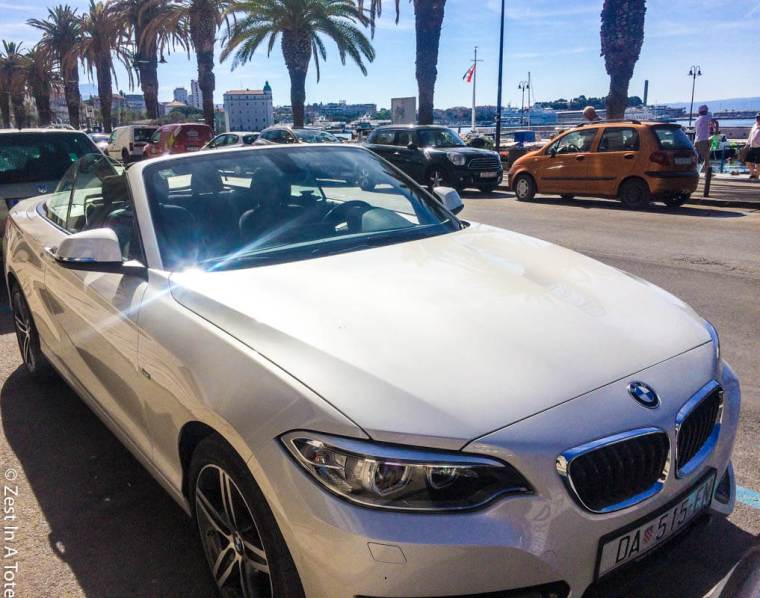
A beamer, three suitcases and a child
The car was a low-slung, good-looking beamer, booked for the day and waiting for them. Signing a few papers at the shop was supposed to be the end of it. It was not.
The attendant and her husband tried every combination to fit three suitcases into the boot. It was not going to happen. Eventually they squeezed two into the back and put the third suitcase and the child on the back seat, and then they were off.
The Makarska Riviera
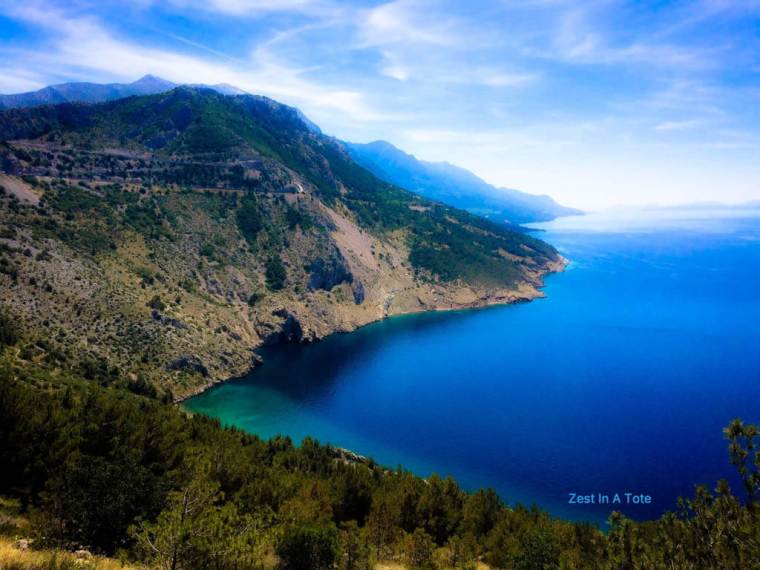
They took the scenic route rather than the motorway: cliffs and villages on one side, the Adriatic on the other. It is longer, but the point of the day was the view. The road runs through the Makarska Riviera, about 60 km of coast popular with visitors to Dalmatia and home to some of Croatia's loveliest beaches and coastal towns.
Nine kilometres of Bosnia
Croatia's coastline is broken by a 9-km stretch of Bosnia and Herzegovina. Passports were ready as they approached the border for the brief pass through the Neum Corridor, but the guards waved them through without checking. No entry or exit stamp, and no Bosnia selfie either, so no proof at all that they had been in the country. The checkpoint on re-entry into Croatia did check and stamp passports.
Oysters in Mali Ston
The southern Dalmatian coast has plenty of seaside towns, but they drove past all of them and headed for Ston. Mali Ston, a small town right on the water and famous for its oysters, would be the stop.
They parked as soon as they arrived and explored on foot. A small road led around the remains of a castle, and just beyond were two restaurants on the waterfront. Only then did they realise they could have driven right up to the restaurant instead of walking in the heat.
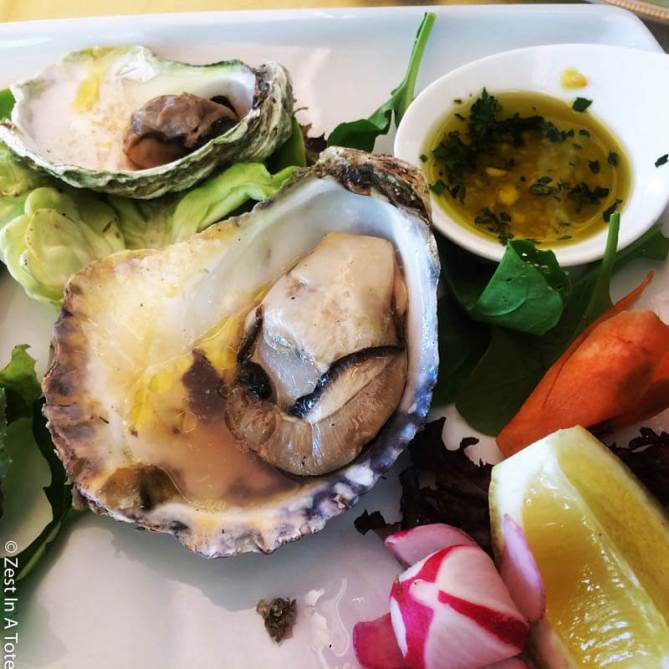
Locals insist their cultivated oysters are the best in the world. The recommendation was Kapetanova Kuca, so that is where they ate, on a pleasant patio. It was the first time Shweta and her daughter had tried oysters, so they ordered them grilled rather than raw. The texture was chewy and unexpected for a largely vegetarian Indian palate. The grilled fresh fish was excellent.
The wall at Ston
By now the day was getting hotter and her husband wanted to press on to Dubrovnik. She had other ideas and talked him into the detour.
Ston felt underrated. On the afternoon they visited there were barely any other visitors. Even committed Game of Thrones fans go to Split and Dubrovnik and skip the town in between where the fortifications around King's Landing were filmed.
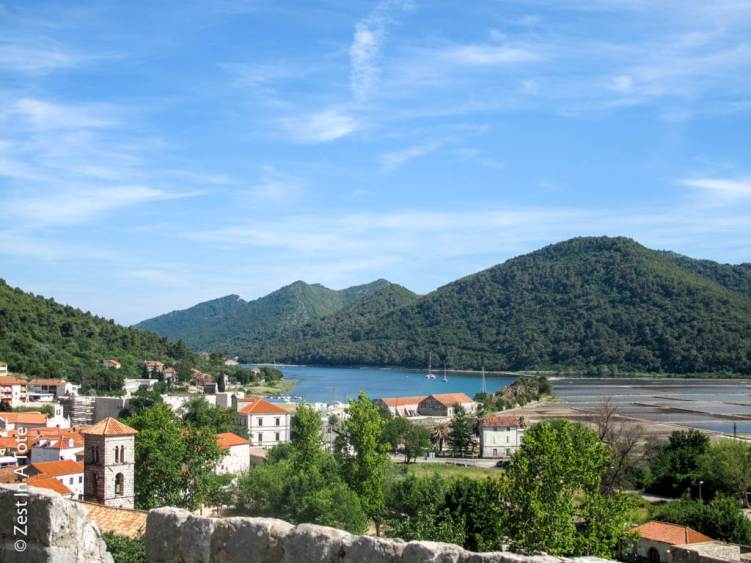
They parked at the edge of town and walked around asking for the ticket counter, which is not close to the wall entrance and took a while to find. A hat would have helped on such a sunny day. Below the walls are the Ston salt pans.
The defensive stone walls date from 1333, when Ston became part of the Republic of Dubrovnik, and were built to defend the republic and the peninsula. Originally 7,000 metres long, they comprise the Ston city walls, the Mali Ston city walls and the Big wall with its three forts. Ten round towers, 31 square flanking towers and six semi-circular bastions strengthen the defences.
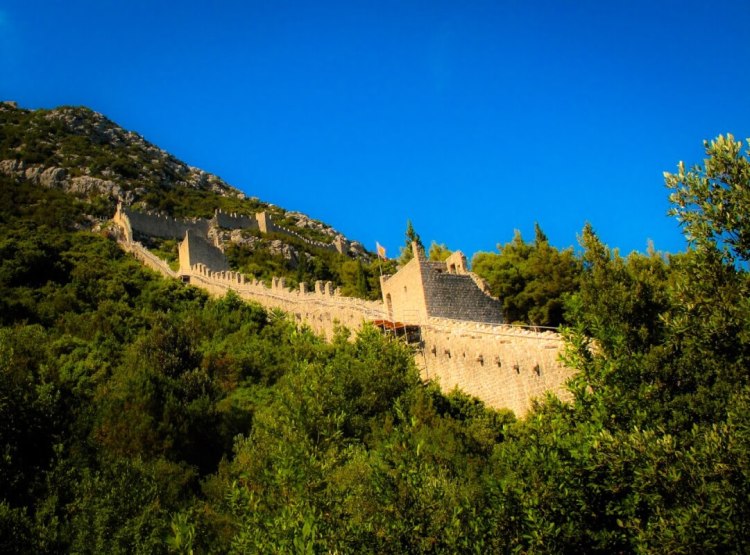
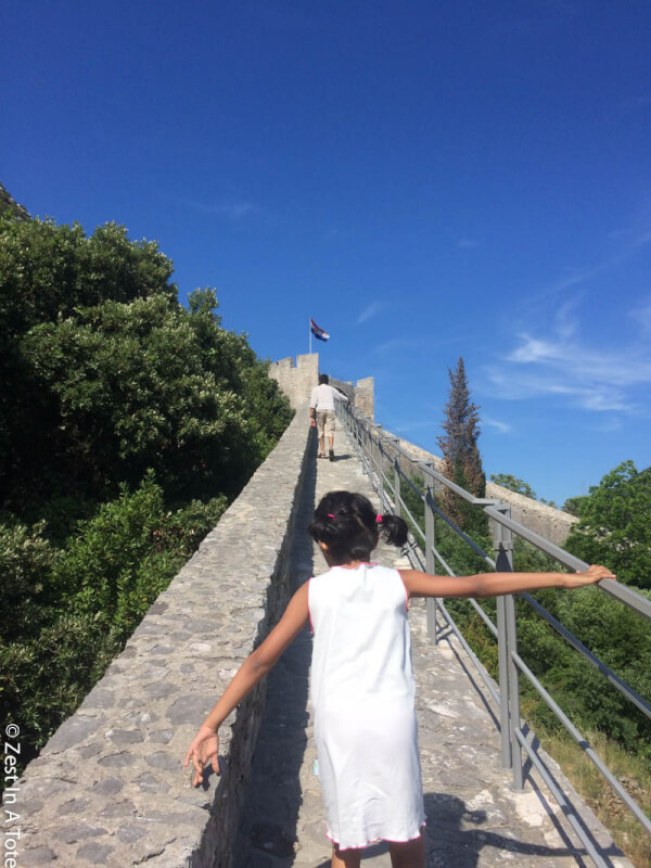
The longest wall in Europe, second only to the Great Wall of China in length, is not something you skip. It took a good deal of persuasion before her husband agreed to climb. Their daughter needed none.
Ston in numbers
- Built from 1333, after Ston joined the Republic of Dubrovnik.
- Original length: 7,000 metres.
- Three parts: the Ston city walls, the Mali Ston city walls and the Big wall with three forts.
- Flanking towers: 10 round, 31 square, plus six semi-circular bastions.
- Ranking: longest in Europe, second in the world to the Great Wall of China.
The last stretch to Dubrovnik
Climbing was exhilarating and exhausting in equal measure, mostly because of the heat. It was a relief to get back in the car, put the air conditioning on full and carry on to Dubrovnik. Once there, they searched online for the Last Minute Rentals shop in Lapad where the car had to be returned.
Later she admitted that the drive, with the convertible top up and the sun in her eyes and the wind in her hair, was one of the most beautiful memories of the Croatian holiday. Her husband could not stop grinning for the rest of the trip.
For more on the country, see this two-week itinerary for Croatia. Planning a wider trip? These practical tips for travelling in Europe are worth reading before you book.
Thanks to Shweta for taking us along. Shweta runs her own travel blog at zestinatote.com, focused on family and luxury travel: destinations, luxury stays and tips for travelling with children. Follow her on Facebook, Twitter and Instagram.
Discover more from Europe Diaries
Subscribe to get the latest posts sent to your email.