
Walking the West Highland Way from Milngavie to Fort William
Scotland squeezes an extraordinary variety of landscape into a small country, and the surest way to meet it is on foot. The West Highland Way runs for 94 miles (152 km), beginning at Milngavie on the edge of Glasgow and finishing at Fort William, beneath Ben Nevis. Nine days is the usual allowance, and those nine days carry you through the country in one unbroken line.
What the trail gives you
Very few long-distance routes pack in as much scenery and as much history. One day you are on the quiet eastern shore of Loch Lomond; the next you are following an 18th-century military road across open ground. Every stage has a story attached to it, and the weather changes the mood of the landscape hour by hour.
There is a social side as well. Walkers look out for one another over the course of a week, and strangers who set off alone end up sharing tables and blisters by the third evening. The route also passes through historic villages where local food, music and hospitality are part of the experience rather than an afterthought.
The route, south to north
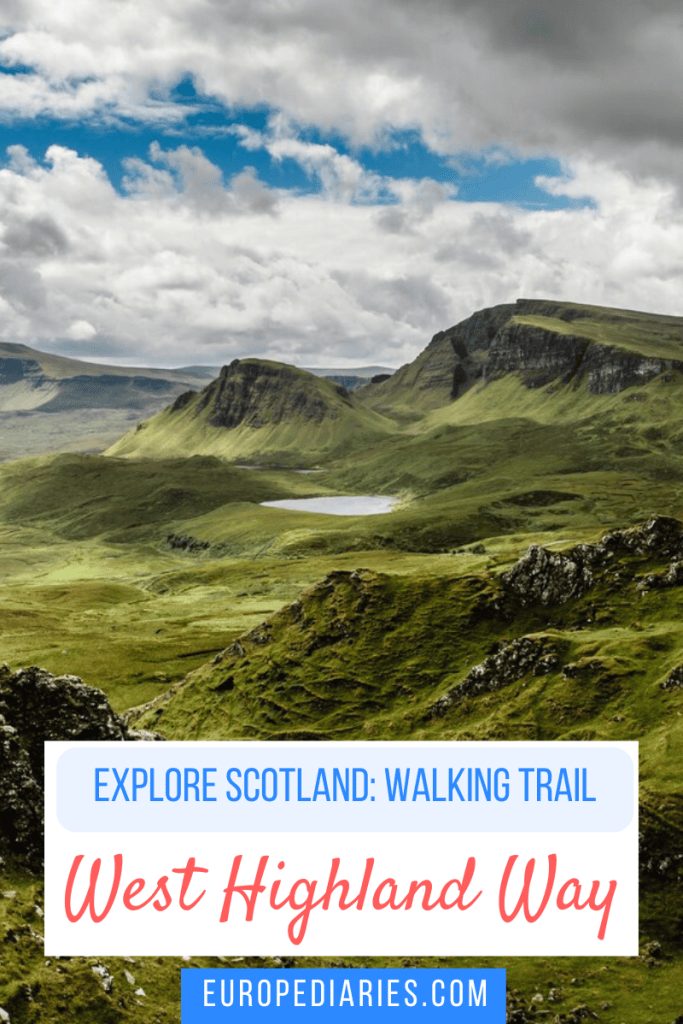
Leaving Milngavie behind, the Way turns north and strings together some of Scotland's best-known viewpoints and sites before it reaches Fort William. These are the stretches to look forward to.
- Loch Lomond. The path follows the eastern shore of the loch, with views that stop you mid-step. On a warm day, and only if the weather is kind, a swim is hard to resist.
- River Falloch. Walking beside the river brings some of the finest scenery on the route, including the twin mountains of Ben More and Stob Binnenin.
- Rannoch Moor. Day six takes you across this remote, boggy expanse, one of the last great wildernesses left in Europe and all the better for it.
- Devil's Staircase. The highest point of the walk, at 550m, comes near the end. The climb is repaid with a view over the surrounding Highlands that stays with you.
- Fort William. The final stop is a highlight in itself: a small historic town with Ben Nevis, the UK's highest mountain, filling the sky behind it.
Timing and organisation
Budget roughly nine days. You can join a group tour or walk it self-guided, and late spring to early autumn gives the mildest conditions. Mildest does not mean reliable: Scottish weather does what it likes, and heavy rain in summer is entirely normal, so pack for it rather than hoping.
Planning is the awkward part, because long sections of the route cross genuine wilderness with little in the way of services. A specialist walking-holiday company takes that weight off. Orbis Ways, for instance, has years of experience running walking holidays in Scotland and a strong record of reviews; they handle accommodation and baggage transfer, so your days consist of walking rather than administration. Their West Highland Way itinerary covers the full route, and you can read more about the company at Orbis Ways.
Train first, walk later
Nine consecutive days of walking is a serious physical undertaking, and this route throws in steep climbs and equally steep descents. Start training weeks in advance, build up distance gradually, and get used to carrying a pack. Arriving fit turns a slog into a holiday.
Do that, and the West Highland Way becomes more than a hike. It is the clearest way to understand Scotland, and the last miles into Fort William feel earned.
Disclaimer: this post may contain sponsored or affiliate links. All opinions remain my own.
Discover more from Europe Diaries
Subscribe to get the latest posts sent to your email.