Eleven Things Switzerland Is Famous For (And Where to Find Them)
Switzerland is small, Alpine, and wedged between Italy, Germany and France, with Austria as a larger cousin next door and Liechtenstein as a very small one. For a country that size it has produced an improbable number of things the rest of the world recognises on sight. Here are eleven of them, and where to go if you want to see each one for yourself.
1. Cows, and everything that follows from them
Every visitor wants a photograph of a Swiss cow, and the cows make it easy. You will find them grazing in places that seem absurd — a mountain pass at 2,400 metres, for instance. They are simply everywhere.
Switzerland loves its cows for a reason. They produce the milk, and the milk becomes the cheese and the chocolate and the rest of the food the country is known for. What makes the milk good is the grazing: the animals spend weeks high in the mountains eating grass that grows at that altitude, rather than standing in a small pasture being fed corn. If you are lucky you will see a shepherd moving a herd through a town, at which point all traffic stops and every phone comes out at once.
To get your picture, leave the motorway and take the smaller roads, even the unsurfaced ones. Grindelwald, the Oberalp Pass and Adelboden are close to certain, and so are most of the small villages.
One warning from the editor: do not walk up to the calves. Cows will chase you, and a sprained ankle is the mild version of how that ends.
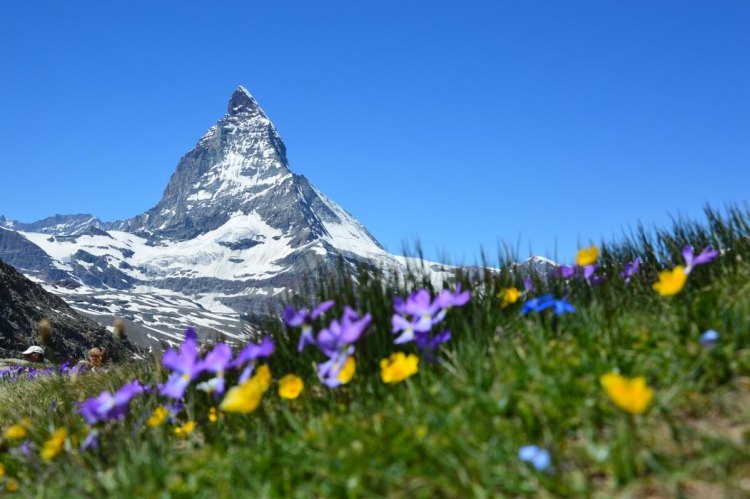
2. Zermatt and the Matterhorn
Zermatt is probably the best-known village in the country and its skiing is the reason many people come. It also has the most recognisable mountain in the world. If the name Matterhorn means nothing to you, look at a Toblerone wrapper. That one.
The village is popular, and busy as a result, but it earns the crowds. What is unusual is how it protects itself: cars have been banned for a very long time, so the only vehicles are small electric delivery and service carts — not Teslas, but the little municipal kind. The care taken over the village and the landscape around it is obvious.
In summer, walk. Head uphill towards the mountain, follow the paths around the lakes, and take your time. The hike from Täsch to Zermatt is the beginner-friendly classic, and a good introduction to what the Alps can do. Climbing the Matterhorn itself is a different matter: only with a mountain guide, or if you genuinely know what you are doing.
3. Trains that run like clocks
The saying is that something works like a Swiss clock. In Switzerland, the thing that actually does is the railway.
The network is the most developed in the world. Almost nowhere is out of reach: small villages, high Alpine valleys, the lot. Some of the trains are attractions in themselves — the cogwheel railway up Pilatus, for example, has to manage a gradient of 48 per cent.
The famous lines are the Bernina and the Albula, both part of the Rhaetian Railway. The Bernina Express is one of the highest trains crossing the Alps and, by some accounts, the steepest in the world. It leaves Chur in Graubünden, passes through Davos and St Moritz, and crosses into Italy. The stretch from Thusis to Tirano holds UNESCO World Heritage status, and the whole run is a pleasure. It is also one of the two most popular tourist experiences in Switzerland.
4. Fondue
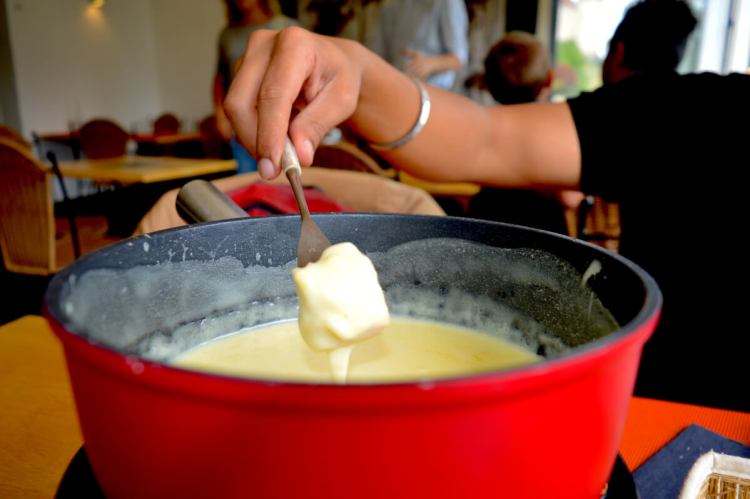
If you come to Switzerland and eat one hot meal, make it this. Fondue is everywhere, and if you like cheese it will ruin other cheese for a while.
The mechanics are simple. Melted cheese, kept over a flame so it stays liquid, with bread to dip and sometimes fruit or vegetables. You spear a piece of bread on a long fork, turn it in the pot, and eat. It is very good, and it is best in winter and best in the mountains. The Valais does it particularly well, which means that if you are in Zermatt, fondue belongs on your list.
5. Sweet things: Luxemburgerli and Läckerli
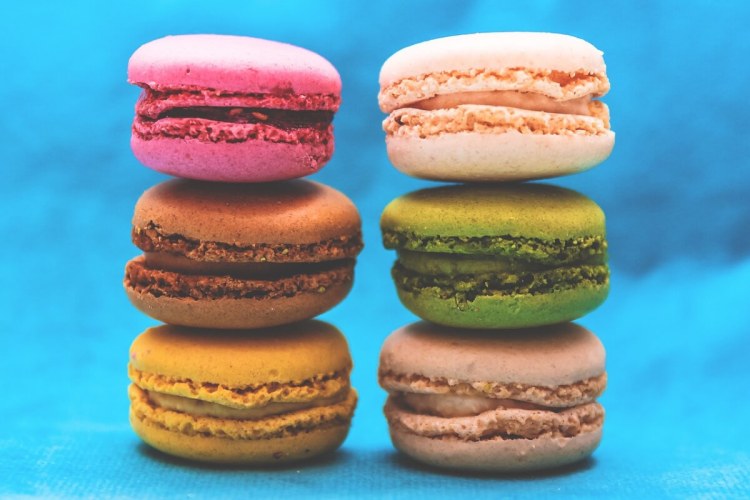
Anyone with a sweet tooth should find a Sprüngli shop and order the macaroons the Swiss call Luxemburgerli. Choosing a flavour is the difficult part.
From Basel comes the Läckerli, a gingerbread with various coatings and flavours, and a good present to carry home. There are more ideas for typically Swiss gifts in my souvenir guide.
6. Villages that look like the postcard
The small Swiss village is the country's most reliable attraction. Old wooden buildings, Swiss flags or cantonal flags on the facades, cows somewhere nearby, a trail leaving from the edge of the houses — everything you hoped for when you booked the trip.
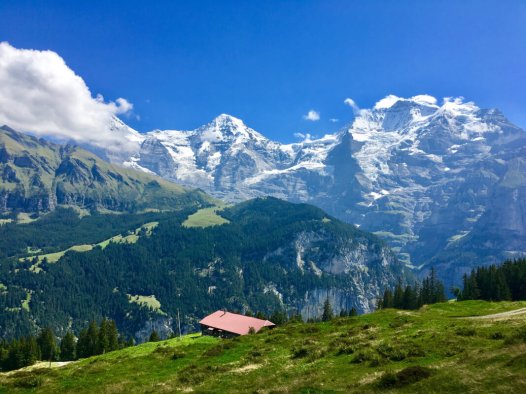
Switzerland has been lucky enough to avoid war for two hundred years, which is why so much old building stock survives. Many villages still have cowbells hanging on the walls, painted shutters and window boxes full of flowers. They are, without apology, cute.
Walk through, take photographs, and cross the farms where it is permitted. Zermatt, Grindelwald, Adelboden and Lauterbrunnen are the best known, and there are dozens more.
7. Cable cars, thousands of them
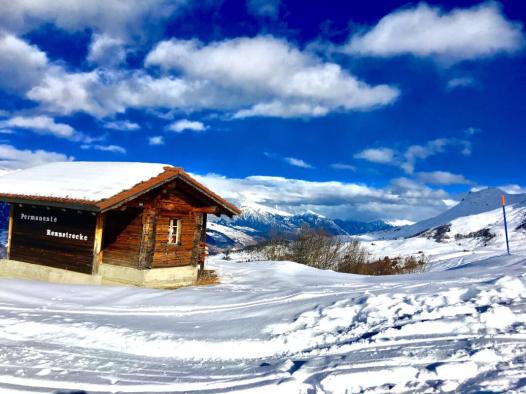
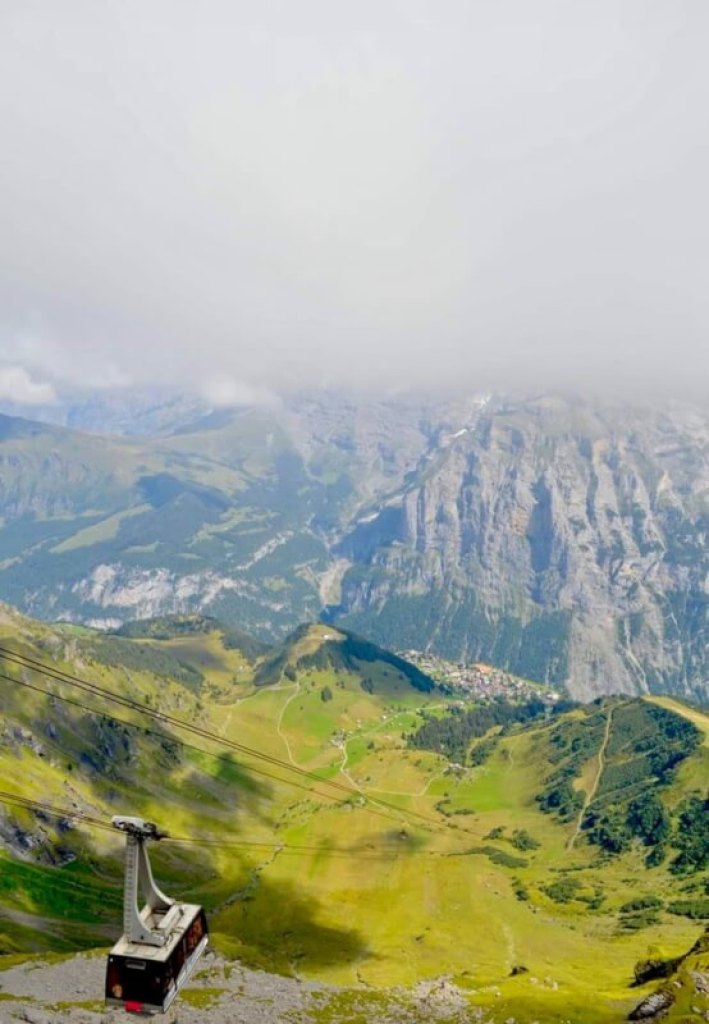
With the Alps in the middle of the country, the cable car is basic infrastructure. There are hundreds of them, in almost every Alpine town, and some villages run their own. Several continue operating through the summer in ski resorts, so you get the full resort experience out of season. Switzerland holds records for both cable cars and waterfalls.
Almost every cable car ends at a mountain station with a restaurant, walking routes, a lake, a playground for children and whatever else the operator has thought of.
The highest in Europe is at Zermatt, climbing to 3,883 metres. At that altitude you can feel the lack of oxygen. Prices run from about 15 CHF in a small village where you go up a few hundred metres, to more than 100 CHF at the big stations such as Zermatt and Grindelwald.
8. Peaks above four thousand metres
The highest point in the country is Monte Rosa at 4,634 metres. The Matterhorn stands at 4,478. In total there are twenty-four peaks over 4,000 metres, which is a serious amount of climbing for anyone so inclined.
Many Alpine towns run alpine schools where you can learn to use ropes, crampons and the rest of it properly.
Please take the warnings seriously. People die in the Swiss Alps almost daily, particularly in winter, and the mountains do not care how experienced you believe you are. The good news is that you do not need to go high to have a superb day: peaks of just over 2,000 metres are within reach of most walkers, usually non-technical, and often a couple of hours from the trailhead.
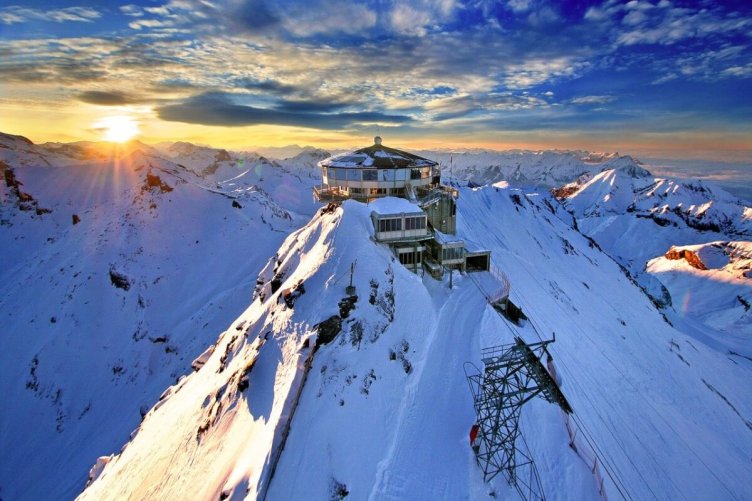
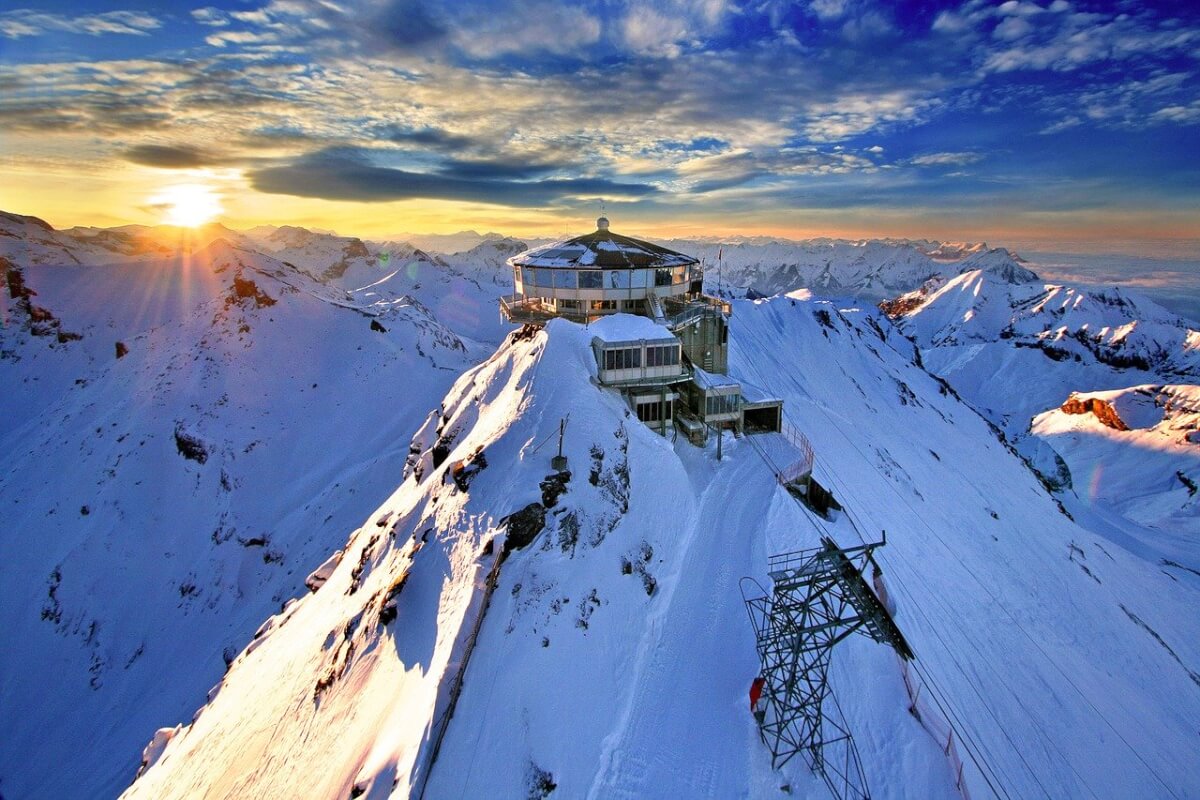
The Schilthorn, famous as a backdrop in a James Bond film, is one of the easier big views to reach.
9. Watches and clocks
A country that supplies the world with a simile about punctuality had better make good timepieces. Rolex is the flagship name, headquartered in Geneva, with prices starting around 5,000 CHF and climbing; a 50,000 CHF Rolex raises no eyebrows here.
Patek Philippe built its reputation on a line of advertising that still gets quoted: you never actually own one, you merely look after it for the next generation. The point is that the watch outlives you.
Omega is perhaps the second best-known brand, and needs only one fact: it made the first wristwatch worn on the moon. If you want to go deeper, there are museums devoted to Swiss watches, and the watchmaking town of La Chaux-de-Fonds is worth the detour.
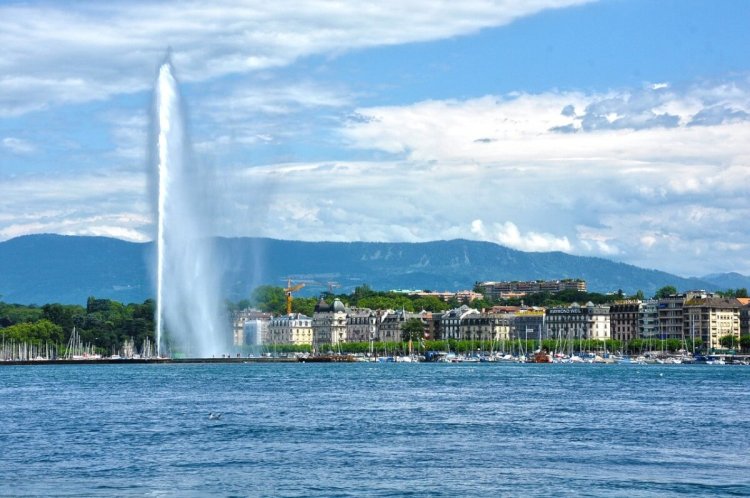
In Geneva you can simply walk the streets where the luxury houses keep their windows.
10. Twelve UNESCO World Heritage sites
The country has nine cultural and three natural sites on the list. Take your pick from the Lavaux vineyards above Lake Geneva, the old town of Bern, the three castles of Bellinzona, or the tectonic landscape of Sardona, and spend a day inside the history of the place.
11. CERN
Switzerland is not only cows, village squares, bankers, watchmakers and cheese. It is also full of scientists, and it leads in technology and innovation, with research institutes and universities to match.
The pharmaceutical industry is enormous, with Novartis, Roche and Syngenta clustered around Basel. And near Geneva sits CERN, home to the Large Hadron Collider. Even if physics has never interested you, you have probably heard of it through The Big Bang Theory, or through the Higgs boson and its nickname, the God particle.
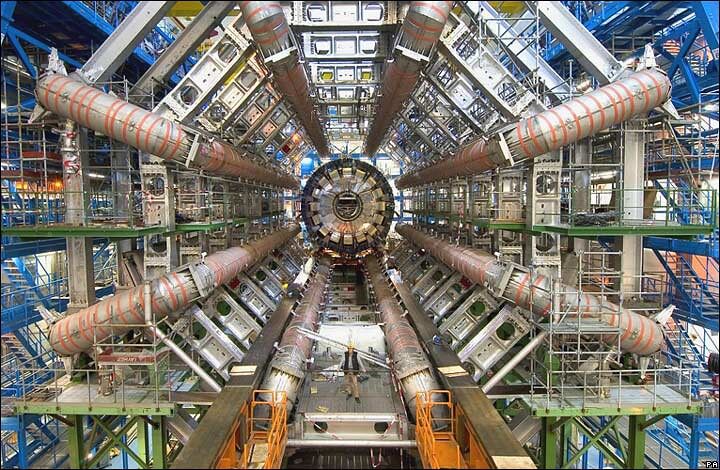
Visits are possible from Geneva, but you have to be quick. Reservations usually open only a few days before the visit, most visits are at weekends, and you need to be at CERN early on the day. It is about half an hour from the city. If you catch an open day, or manage to book, it is an unforgettable few hours.
If you only have a week
Ride a train through the Alps, eat fondue in the Valais, take a cable car up something high, and spend an afternoon in a village where the loudest thing is a cowbell. That is the country in miniature. It is one of the safest, cleanest and most beautiful places to travel in the world, and the difficulty is not finding something to do — it is choosing.
Read more about how to combine a cheese and chocolate factory visit in Gruyères, or about what else is famous on a Swiss table.
Discover more from Europe Diaries
Subscribe to get the latest posts sent to your email.
Kritika
Switzerland is one of those countries that will be on the bucket list of many. I am dreaming of visiting this beautiful country for a long. This blog has made me more desperate to plan a visit.
John
I am American and am impressed by Switzerland’s record on neutrality. The fact that the Swiss don’t have an army, they ARE an army has something to do with that. I was last in Switzerland in 2003 and was going to go in 2020, but you know! I enjoyed it there so much I’m looking forward to my next trip there.
My cousins live in Austria but Swiss German is the easiest for me to understand.
Mohammad Naseem
Marvelously described, and very informative
Jennifer Dunn Jarquin
Greetings from Costa Rica!
I love your article and would love to visit Switzerland and the CERN, do I require a Visa to get in to the country? What places would you recommend for someone traveling in a budget? Thanks
reflectiveponderer
Hey Jennifer! Switzerland needs a Schengen visa..you would have to check if your passport allows entry to Schengen countries without a visa? If not, you can apply for a tourist visa and show your itinerary, your planned accomodations etc. I’d love to share budget options with you once i know for how long you might be planning to stay and in which season? In general, the most popular attractions like the Jungfrau, Titlis and Matterhorn are quite expensive… mountains like Rigi or Pilatus are beautiful and much cheaper although lower altitude, so you would likely not see snow in the summer. Best thing might be to get halbtax or day passes or 3 day passes that could allow you to use all public transport and also get doscounts on cable cars
Martin
Just booked a 2 week stay in Geneva this morning completely out of the blue, I don’t know what to expect or what I’m going to do there but I have always wanted to go and this post has just made me all the more excited and eager to go.
Travel Center UK
This is such an awesome. take me to Switzerland now. Looking forward to travel in 2021 😉 and i think it’s the best to travel in the winter season. what do you think?
Samreengulzar
Exactly in the winter i have np word to describe swiss beauty… i love winter weather i live in swiss and seriously in winter swiss more beautful than the other days
ULO
Really cool to know.
Abdou
Glad I enjoyed the post!
Michelle
This is such a great post. I would love to visit Switzerland but I have hear that it is pretty expensive so I haven’t been yet. Your pictures look beautiful and make me want to go no matter what!!
reflectiveponderer
Hey Michelle, Thanks! Switzerland is expensive but there are ways to save money. I will compile some hacks and tips soon and keep you posted
Greta Milkovic
I love Switzerland, haven’t explored it as much as I would like to, but since I live in Munich now, I need to go. Thank you for all your tips and inspiration 🙂
reflectiveponderer
So cool to know you are in Munich now. Yes, you must definitely plan a trip to Switzerland and feel free to reach out anytime