


16 expats share tips on moving to Germany
Are you planning to move to Germany and have a multitude of thoughts going through your mind? Or maybe you are in the process of applying for studying in Germany or simply wondering how it is like working and living in Germany. Well, as some of you might now, I studied and lived in Germany myself before moving to Switzerland and am familiar with many of the thoughts and concerns people have before moving to a new country. I decided to create this useful resource for anyone who might be thinking about moving to Germany and spoke to a few expats in the country. Here is how they answered one basic question:
Moving to Germany: advice from sixteen expats
I studied and lived in Germany before moving to Switzerland, so I know the questions that circle before a move: where will I live, will I understand anyone, how do I sort out insurance, what should I pack. Rather than answer them all myself, I asked people who had already made the move one question: what advice would you give someone planning to move to Germany? Sixteen expats replied, and their answers cover everything from grammar classes to pressure cookers.
1. Start with the language
Life without German is possible in some cities and much harder in others, depending on where you settle. A beginner's course before you leave — the Goethe Institute is the obvious example — gives you a foundation, and a course after arrival builds on it. Apps such as FluentU, Duolingo and Babbel fill the gaps between lessons.
"Learn the language or try to learn some basics. It goes a really long way by just knowing a little German. They appreciate you learning their language and making an effort."
— Vishal Bhartia
To get started, see From German to Swiss-German: basic words and phrases, this list of 15 German words you need to know, and these funny stories about mistranslations.
2. Sort out housing first
Try to have somewhere to sleep before you land, even if it is only temporary. Websites and noticeboards cater to shared flats, short lets and student dorms. If you are a student, email your programme coordinator and apply for university housing as soon as the application opens.
"For apartment search, I'd suggest WG-Gesucht and Schwarzesbrett; you will find a lot of ads there. And be prepared for an interview-like process when looking for a room in a shared apartment, as most people are looking for like-minded flatmates."
— Henar Gomez, Wanderwings, @wanderwings
A short stay of a few days is easiest arranged through one of the short-let platforms before you start viewing flats properly.
3. Throw yourself into the culture
Germany rewards curiosity. Stay up late for the Night of the Museums, go to music festivals, carnivals and parades, and join meetups with locals through meetup.com or your university's language and culture exchange groups.
"Try to experience as many of the wonderful things that Germany has to offer. There are so many festivals, markets, hikes, beer gardens, vineyards, galleries, museums and castles to explore all over the country."
— Meredith, Kaffee und Kuchen, @kaffeekuchenco
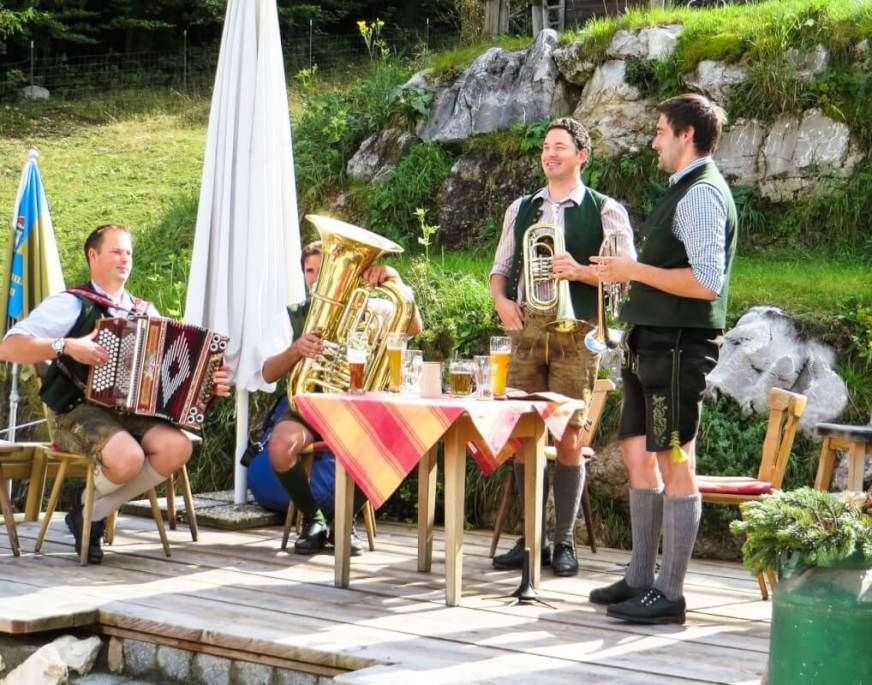
Two useful reads before the season starts: 10 festival hacks for carnivals and Oktoberfest and the best Christmas markets in Germany. Lederhosen and Dirndl are the traditional costumes for men and women, and beer and Bavaria have a long shared history.
4. Eat and shop like a local
Try the regional food and the beer; non-alcoholic flavoured beer is easy to find if you would rather not drink. Vegetarians have nothing to fear. Penny, Netto and Aldi are the cheaper supermarkets, while Rewe and Hit stock a wider range. Asian and African shops cover the ingredients you will not find on a German shelf.
"Hang out in the beer gardens, try out currywurst and Kolsch Beer! For regular grocery shopping, I feel very comfortable visiting Rewe."
— Manvi Mahana, Product Manager
"I would advise people to learn at least basic cooking skills, before coming to Germany."
— Madhu Ram, IT Professional
"Lazy to cook or can't find good food? Liefer Service DE is a lifesaver when you are moving to a new city in Germany and it's the best when you are lazy!"
— Vishal Bhartia
"Don't forget to get some basic spices from home (esp if you are a South Asian) for cooking regular meals. I prefer cooking at home to eating out every day. Also, it isn't a bad idea to save up a bit and then go travel when you can!"
— Sankalp Jain, PhD Researcher
For vegetarian ideas across the country, see delicious vegetarian dishes in Germany and 23 other countries. Dumplings, or Semmelknödel, are a traditional dish; the best I have eaten, with mushroom sauce, were at Neckarmüller in Tübingen. Some of my other favourite restaurants in Germany are collected here.

5. Learn the transport system
Students often receive a travel pass for their state or region. For daily commuters a monthly card usually pays off, and a DB Bahn card is worth considering for longer journeys. Trains, buses and carpooling cover most trips.
"Memorize the U-Bahn stops all over your city. Public transport is immaculate and extremely convenient. I use it daily and for long/short distances. Get the yearly pass which is not too expensive. Travel around Europe since you can do so without any limitations and Germany is in the heart of Europe."
— Vishal Bhartia
For budget options, read the cheapest ways to travel in Germany.
6. Pack light, and pack warm
Students should leave the electric iron, toaster and electric cooker at home; they are affordable here. A universal adaptor is worth the space, so laptop and phone chargers work without fuss.
"I would say having a warm jacket is the first basic requirement if you are coming in autumn or winter. So do carry one if you own it!"
— Komal Soni, Postdoctoral Researcher
If you do not own winter boots or a warm coat, buy them after you arrive, along with a muffler, gloves and a cap. Deichmann sells reasonably priced shoes and boots, and department stores cover the rest. Watch for the sales that come a few times a year, when discounts across the range are steep.
One item deserves its own paragraph. Dhruva Deshpande, a PhD researcher, argues that every Indian moving abroad should bring a pressure cooker. It is, in his words, the companion that makes chawal daal possible in all its forms — tadka, sambar, missal — and it will also boil an egg for breakfast, produce a pav bhaji for fellow expats or a halwa to prove to new German colleagues that Indian food is not only chilli. His advice on the 32 kg allowance: leave the kurtas and pyjamas behind, because you will never wear them, and make room for the cooker.
7. Arrange health insurance
Health insurance is compulsory in Germany. You can choose a public or a private provider, and most foreign students take a public one such as AOK, TK or DAK.
"If you are coming for a short period of time (from other EU country) make sure you get the EU health card, it'll save you some money as it's obligatory to have a health insurance. If you are a preparation student, I can recommend you check Mawista (health insurance) basic coverage and reasonable price for short periods of time."
— Henar Gomez
8. Studying, and what comes with it
"Scholarships are not so easy to get, but you can try for part-time jobs. Knowledge of German can be a very big advantage in that. If you are interested, start looking for part time jobs before your funds run out."
— Adhideb Ghosh, M.Sc Graduate
"It will be a great time to enjoy parties, the wide variety of beer, European cuisines and travel (make use of the extended weekends!). Be sure you are in the right company for studies/exams/parties/tours. I'd warn people studying Life Sciences that getting a job may not be very easy, although there are a lot of research opportunities in Germany."
— Vishal Siramshetty, PhD Researcher
"I would suggest students take up part-time work that would benefit their course. Also, if you can, try devoting some time to voluntary or social activities. These things help build your resume and are helpful while applying for jobs."
— Joy Bhowmik, M.Sc Graduate and Former Intern at UNFCCC

9. Read the small print on contracts
Be cautious with any gadget bought on a post-paid contract: understand the charges and the cancellation terms before signing. The same applies to ADAC membership, a DB Bahn card and anything similar. Cancel well ahead of the deadline, or the contract may renew for another year automatically.
"If you want to buy a new phone or so, save up till you can afford to make the down payment. Otherwise, be careful while entering into contracts with companies."
— Sagar Sharma, MBA Student
10. Looking for work
Students can apply for a job search visa after their course, which allows up to 18 months in the country to find work. Others can apply for a work visa once they have a contract, or arrive on a six-month job seeker visa and look while they are here.
"I would say that the key to finding a job is networking and not getting deterred by rejections. Reach out to people and find out more about the field of work you want to work in. For those outside Germany, getting a Job Seeker Visa and then meeting companies to look for a job could be a good option."
— Monitha, Project Lead – Data Management
"Buy a premium membership on a professional platform like Xing or LinkedIn. Complete your profile and do not forget a recent photo. Look for groups matching your professional background, future wishes and even private interests. Be active in order to be visible. Attend events, public speeches etc in order to do active, face to face networking."
— Alexandra Jensen, threeonthego, @OnTheGo2013
If you are weighing up jobs or relocation, this search may be a place to start.
11. Adjust to the office
"Germans are informal outside of office hours. Very forthcoming and friendly. But during office hours, the tone is very formal. You are on last name and "per Sie" – You in the formal form. Should you have a university- or a doctoral degree, you better put that title on your business card and in the phone book! Also, you can easily read up on all procedures of the company in the thick manuals that you find in the bookshelves in most HR departments. To many Germans, the strict procedures for EVERYTHING are, in fact, what they find most comforting because they eliminate all unpleasant surprises."
— Alexandra Jensen, threeonthego, @OnTheGo2013
12. Build a life outside work
Making friends as an adult takes effort, but there are several routes into a new city. These ways to meet people and make friends abroad are a good starting point.
"Find ways to get involved with the expat community and the local community. I joined some online expat communities several months before moving to Germany and a few more once I arrived. These groups offer resources to prepare for your move (such as info about visas, accommodation, insurance, etc.) and often organize events where you can meet people in your new city."
— Meredith, Kaffee und Kuchen, @kaffeekuchenco
"Currently, everyone is expected to pay a monthly fee for DeutschRadio/TV, whether or not you watch it. Don't ignore any official letters you may receive in your post, or else you may fall into trouble. Also, using Torrent or any website that uses Torrent is illegal and you can be sent legal notices if you do so. So, please be careful about downloading movies or TV shows."
— Jamshaid Ali, Former Post-doctoral scientist
If any of this sounds familiar, pass it on to someone still packing. And if you have made the move yourself, add your own advice below.
More about Germany
10 ways to enjoy for free in Cologne
10 reasons you will love my favourite city of Heidelberg
15 things to do and see in Berlin
How to plan a weekend getaway to Munich
Walking around the small, fairytale town of Tübingen
A glimpse of Stuttgart and the beer festival
#NoFilter Frankfurt
The thrill of finding English books in a non-English speaking country
On the banks of the Neckar: a poem dedicated to Heidelberg
Tips for enjoying Oktoberfest in Munich
Discover more from Europe Diaries
Subscribe to get the latest posts sent to your email.
Anja
I am German, live in Germany but lived abroad for many years. I think knowledge of our language and appreciation of our culture will get you a great step forward. We need immigration, especially those working in fields where there is a shortage, and I hope the famous German bureaucracy did not make it too hard for you